
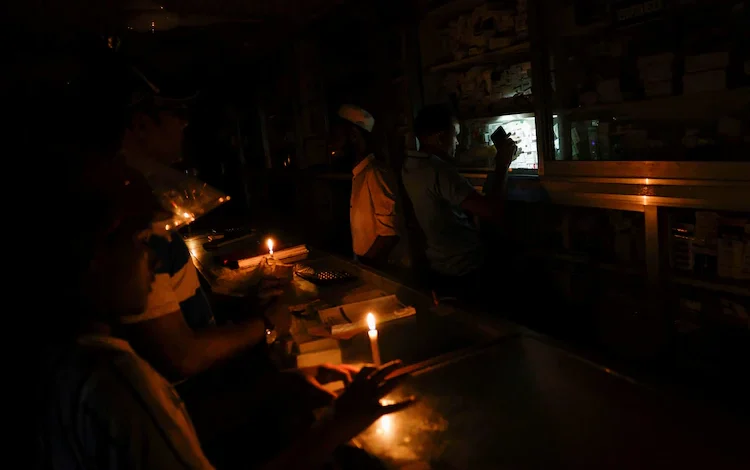
Bangladesh is grappling with one of its most severe energy crises in recent memory, with several parts of the country facing prolonged power outages. The situation has grown so acute that the government has directed shopping malls, shops, and markets to shut down by 8 pm to conserve electricity. Businesses, farmers, and industries have all been hit hard by the worsening power crunch. To tide over the crisis, Bangladesh has turned to India, seeking additional diesel supplies.
The power shortage is being felt most acutely in rural areas outside the capital, Dhaka, where outages are stretching to 8-10 hours, according to local reports. A sweltering heatwave has only compounded the difficulties. Demand has hovered around 18,000 MW, while supply has struggled to reach even 13,000 MW.
Power Stations Come Under Attack
The prolonged load-shedding has driven frustrated residents in some areas to attack electricity facilities, according to a report in Dhaka Tribune. This has forced the Bangladesh Palli Bidyut Association to seek police security for grids, substations, and electricity offices. Over the past few days, local police stations have received letters from electricity cooperatives requesting the deployment of police and regular night patrols at power installations. Reports of vandalism and arson have emerged from Saidpur, Nilphamari, and Kushtia.
In some areas, power department officials have been attacked while carrying out drives to collect outstanding electricity bills. In Netrokona, officials are reportedly receiving hostile phone calls and threats of vandalism against their offices, according to a report in Daily Star.


So what triggered the current crisis? The situation stems primarily from a shortage of fuel, particularly natural gas. Bangladesh imports more than 90% of its oil and 30% of its gas requirements.
Why Is Bangladesh Facing a Power Crisis?
The latest crisis can be traced to two specific incidents. LNG supply dropped by half after a fire at a terminal owned by US company Excelerate Energy last month. The terminal was shut down following the July 21 tragedy, with partial operations resuming only earlier this week.
Secondly, at least two LNG vessels have been unable to offload at terminals due to rough weather at sea, according to a Daily Star report. Power supply from imported electricity has also declined, further worsening the blackouts.
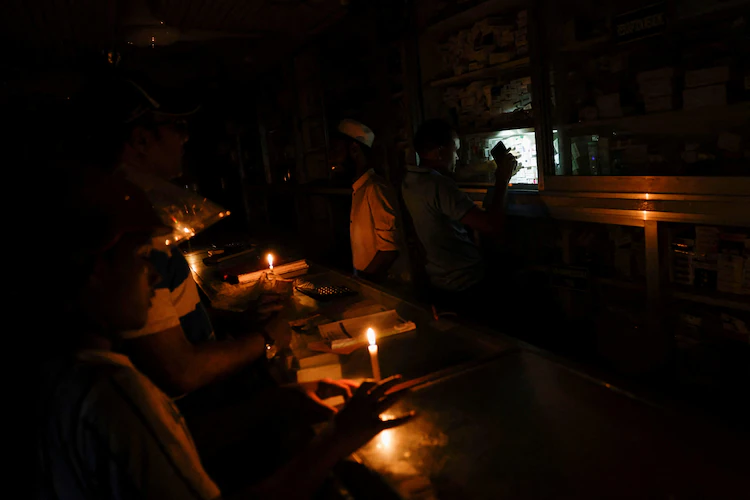
Six distribution companies supply electricity across Bangladesh. At present, Dhaka is receiving power according to demand, while rural areas outside the capital are served by 80 cooperatives.
The gas shortage has severely impacted electricity generation. Bangladesh’s power sector requires more than 1 billion cubic feet of gas a day, but current supply stands at just 700 million cubic feet, resulting in severe load-shedding nationwide. The supply crunch is being felt particularly in Mymensingh, Barishal, Rangpur, Sylhet, Rajshahi, and Khulna, with most regions experiencing three to five hours of load-shedding daily. In Khulna, residents have reported outages lasting 9-10 hours.
Businesses, Farmers Feel the Pinch
The extended power cuts have disrupted farming, restaurant operations, and industrial production, forcing farmers to spend more on diesel generators. Shrimp farmers have been among the worst affected.
“Whenever the power goes out for several hours, we become anxious. The aerators stop working, oxygen levels in the water fall, and the shrimp begin to suffer,” Pabitra Roy, a shrimp farmer, told Daily Star. Bangladesh is the world’s second-largest exporter of shrimp.
The country’s textile and garment sector, a mainstay of its economy, is also feeling the strain.
With officials warning of no short-term relief, Bangladesh has resorted to austerity measures. On Wednesday, the Tarique Rahman-led government ordered all shopping malls, markets, and shops to close by 8 pm. All trade fairs and cultural events across the country must wrap up by 8 pm, decorative lighting has been barred, and illuminated billboards must be switched off by 7 pm. Hospitals and pharmacies remain exempt from these restrictions.
For many Bangladeshis, the measures are a case of déjà vu just months ago, at the peak of the energy crisis in April during the Iran conflict, all shops and shopping malls were ordered to close by 6 pm.
Bangladesh Turns to India for Help
The government said the fresh measures are part of an intensified effort to conserve power. To tide over the crisis, Bangladesh has requested India for additional diesel supplies. This request was communicated to Indian High Commissioner Dinesh Trivedi during his meeting with Bangladesh energy minister Iqbal Hassan Mahmood last week.
Also Read:Taylor Swift’s ‘August’ Vanishes From Trump Video And The Music Battle Isn’t Over
“We have a pipeline with India through which diesel is supplied. We have asked them to provide more,” Mahmood told reporters.
The India-Bangladesh Friendship Pipeline, operationalised in 2017 during Sheikh Hasina’s tenure, plays a vital role in ensuring Bangladesh’s energy security. Under a 15-year agreement, India is obligated to send 1,80,000 metric tonnes of diesel annually to Dhaka. India has already sent over 30,000 tonnes of diesel to Bangladesh in March and April during the Middle East turmoil.
This assistance comes even as ties between the two neighbours face turbulence over India granting shelter to deposed prime minister Sheikh Hasina. Hasina’s recent address to the media in Delhi — her first public speech since fleeing Dhaka in 2024 — has only added to the tensions.
For Bangladesh, the present crisis has once again exposed its heavy dependence on imported fuel and gas. While additional diesel from India may offer short-term relief, the larger challenge remains diversifying its fuel supplies.