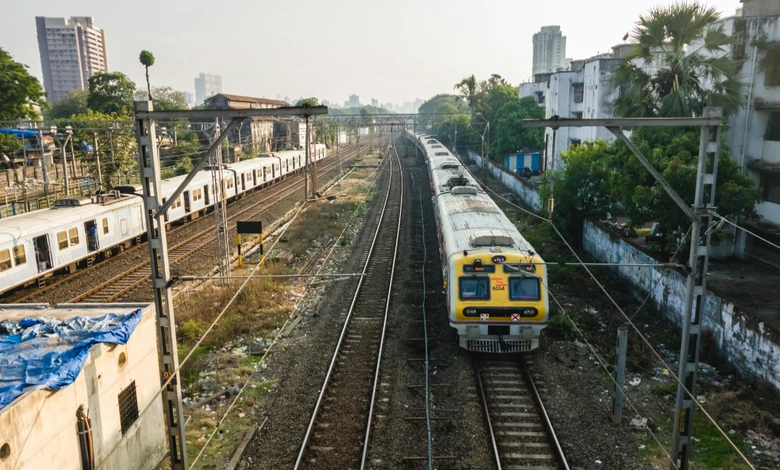
Central Railway is preparing to roll out Mumbai’s inaugural non-air-conditioned local train equipped with automatic closed doors, a significant safety enhancement prompted by a fatal accident last year. The development follows the tragic Mumbra incident in June 2025, where five passengers died and eight were injured after falling from overcrowded trains during peak hours while standing near open doors.
The Railway Board responded swiftly to the tragedy by mandating automatic doors on all new non-AC suburban trains, marking a departure from the long-standing open-door practice that many commuters have viewed as an inherent risk of daily travel in the city, according to reports .
Recent photographs circulating online reveal the prototype, featuring metro-style automatic doors installed in the compartments. The train has been readied and is slated for extensive trials and safety evaluations before entering passenger service on the Central line.
ALSO READ : BMC Elections 2026: BEST Bus Services Cut By 40% Daily Till January 15
A senior Central Railway official informed that groundwork for the initiative began in September 2025, three months after the Mumbra deaths. Trials took place at the Kurla Carshed, attended by the then General Manager, Dharam Veer Meena. By October, authorities confirmed a prototype was prepared for pilot operations.
The CSMT-Kalyan corridor emerges as the prime candidate for the initial pilot run, focusing on peak-hour services where overcrowding poses the greatest hazards. Plans involve replacing existing rakes on this stretch with the new closed-door non-AC trains.
Concerns have surfaced among commuters regarding potential suffocation inside the non-AC coaches with doors sealed shut, particularly during Mumbai’s humid conditions and rush-hour crowds. Some social media users have voiced fears that without robust ventilation, the compartments could become uncomfortably stuffy.
Railway officials have addressed these worries, assuring that air circulation will remain adequate. The non-AC coaches are designed with full interconnections between compartments—similar to AC locals—enabling passengers to move freely and allowing better airflow throughout the train.
No specific launch date has been announced for the pilot service, and the timeline depends on the outcome of trials. On the question of fares, there has been no indication of any changes to ticket prices for these new trains.
This initiative represents a key step toward reducing fall-related fatalities on Mumbai’s overburdened suburban network, where open-door travel has historically contributed to numerous accidents. The success of the pilot could pave the way for broader adoption across the system.
-

-
-
-