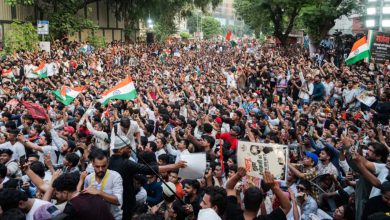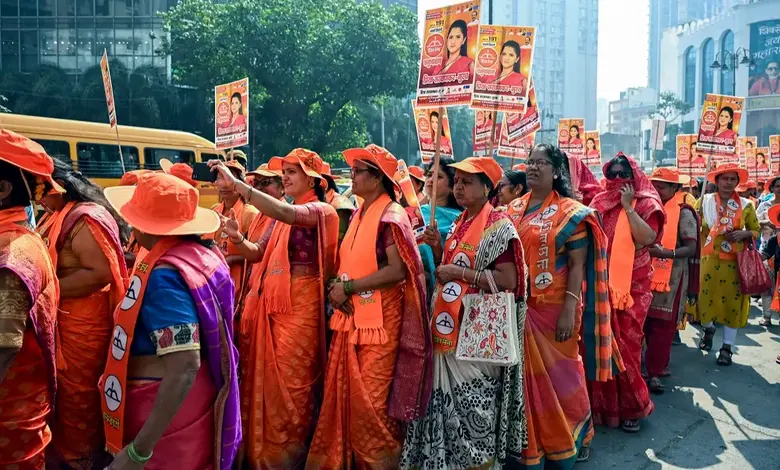
In the final stretch before voting in Maharashtra’s civic elections, candidates in 29 municipal corporations—including the Brihanmumbai Municipal Corporation (BMC)—retain the right to conduct personal door-to-door outreach until January 14, despite the imposition of a strict ban on public rallies and amplified events.
Public campaigning, encompassing processions, mass meetings, and loudspeaker usage, ended sharply at 5:30 pm on Tuesday, initiating the mandatory 48-hour quiet period ahead of polling on January 15. Results are expected to be tabulated on January 16.
Maharashtra State Election Commissioner Dinesh Waghmare addressed media concerns during a press conference, confirming that limited personal interactions remain allowed under long-standing rules. Candidates may visit homes or speak directly with voters, but only in small groups of no more than five people (including the candidate), and without microphones, loudspeakers, or any sound amplification equipment. Such activities are prohibited within a 100-metre radius of polling stations to maintain compliance.
Waghmare stressed that this provision stems from an order dated February 14, 2012, consistently enforced in prior elections, including the 2024 Lok Sabha and Assembly contests. He refuted suggestions that the guideline was a recent alteration intended to advantage particular contestants, stating clearly: “This is not a new order as it was applied during the 2024 Lok Sabha and Assembly elections.”
ALSO READ : BMC Elections 2026: BEST Bus Services Cut By 40% Daily Till January 15
Electronic forms of canvassing, such as SMS blasts or other digital messages, are barred following the close of the public campaign phase. The commission has disseminated the directive to all municipal commissioners and district collectors to guarantee consistent application across the state.
Waghmare underscored a zero-tolerance stance on inducements, warning that distributing cash or gifts constitutes a criminal offence and remains under rigorous surveillance.
The commissioner also touched on separate matters: a preliminary review exonerated officials in a Colaba nomination dispute, with additional video material under examination; meanwhile, a formal report has been demanded from the Kalyan-Dombivli Municipal Commissioner concerning an alleged cash distribution video in Ward-29.
Political observers have raised practical concerns, noting that while public events are easier to monitor, dispersed household visits could heighten the risk of model code of conduct violations and inter-party friction.
-
- Mumbai Air Quality Satisfactory at 80 as Temperatures Set to Touch 36°C
-
-