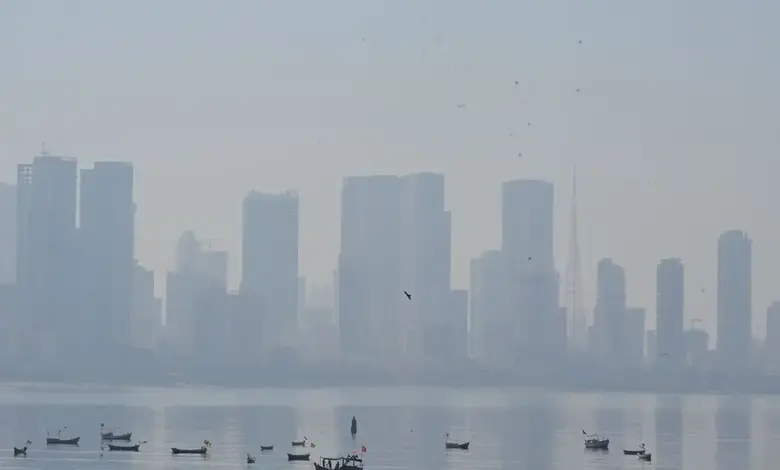
Mumbai residents greeted Tuesday, January 13, 2026, with an inviting winter scene: clear blue skies, light breezes, and a welcome drop in temperatures that promised a refreshing day. The early morning freshness offered brief respite from the usual urban hustle, but this pleasant start quickly gave way to thick smog that blanketed the city, slashing visibility and highlighting persistent air quality challenges.
The India Meteorological Department (IMD) had anticipated partly cloudy conditions, forecasting a minimum of 19 degrees Celsius and a maximum of 31 degrees Celsius. Yet, despite these benign weather expectations, pollution levels climbed rapidly in the morning hours, overshadowing any seasonal comfort.
Monitoring data from AQI.in indicated that Mumbai’s overall Air Quality Index reached 239 early in the day, firmly within the ‘unhealthy’ range. At such readings, vulnerable populations—including children, older adults, and those with lung or heart conditions—face heightened risks, prompting health advisories to minimize outdoor exposure and prevent worsening of symptoms.
Construction dust continues to drive much of the pollution surge, stemming from extensive citywide infrastructure work. Key contributors include ongoing metro rail expansions, flyover builds, coastal road projects, and road-widening schemes. Rapid residential and commercial real estate development has amplified dust emissions, while peak-hour vehicle exhaust adds further strain, making sustained air quality control a formidable task.
ALSO READ : Mumbai BMC Elections : 2,600 Locations and 10,231 Booths Ready for January 15 Voting
Several neighborhoods emerged as critical pollution hotspots. Wadala Truck Terminal posted a severe AQI of 361, dangerous even for healthy individuals. Other high readings included Vashi at 337, Kurla at 326, Sewri West at 309, and Bandra Kurla Complex at 302—all in the ‘severe’ category. Suburban pockets showed mixed results: Kandivali East and Santacruz East registered ‘moderate’ levels at 88 and 98, while Borivali West, Jogeshwari East, and Powai fell into the ‘poor’ bracket.
Standard AQI categories classify 0–50 as ‘good’, 51–100 as ‘moderate’, 101–200 as ‘poor’, 201–300 as ‘unhealthy’, and above 300 as ‘severe’ or ‘hazardous’. Tuesday’s figures reveal how pollution blankets wide swathes of the Mumbai Metropolitan Region, even under otherwise favorable winter weather patterns.