
(From Our Correspondent)
Mumbai: With June nearly at an end, several parts of Mumbai received over 100mm (four inches) of rain in just four hours of heavy overnight downpour on Monday, leaving many low-lying suburban areas waterlogged. The India Meteorological Department (IMD) has issued a yellow alert for Mumbai and Thane for today, and an orange alert for Mumbai, Thane, Palghar and Raigad from July 1 to 3, forecasting heavy to very heavy rainfall.
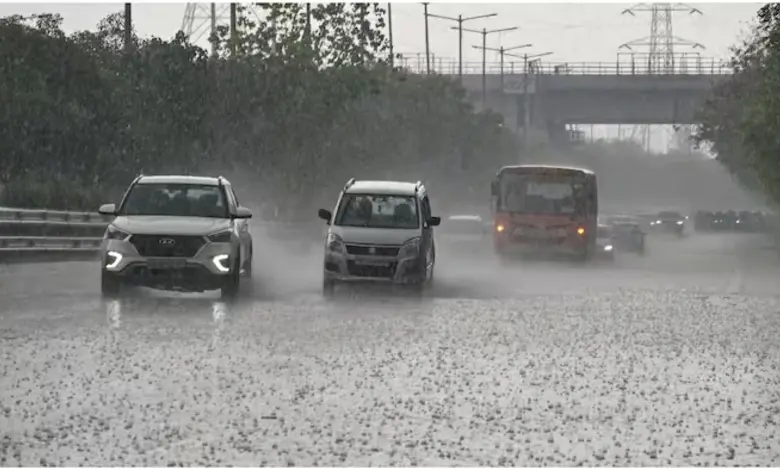
After two days of intense rain last week followed by a brief lull, the monsoon made a forceful return on Monday night. Rain began across several parts of Mumbai around 11 pm. In just four hours overnight, eastern and western suburbs received an average of five to six inches of rainfall. South Mumbai saw comparatively lighter rain during the same period. The downpour eased after 4 am, before intensifying again from Monday afternoon across Mumbai, Thane and Navi Mumbai.
According to civic body data, heavy rain fell between midnight and 4 am on Sunday night, with Versova recording 157mm (about 6.25 inches) the heaviest in the city flooding the Andheri subway. Marol recorded 108mm (4.25 inches), Oshiwara 108mm (4.25 inches), Mulund 160mm (6.5 inches), Mankhurd 123mm (5 inches), Powai 122mm (5 inches), and Bhandup 120mm (5 inches). In contrast, Mumbai Central recorded 34mm, Malabar Hill 37mm, Dadar 45mm, and Matunga 53mm.




Stress-test flag: the source text gives Bhandup’s range as “five inches” for 120mm, which checks out (120mm ≈ 4.7 in, rounds to ~5). But it earlier lists Marol/Oshiwara at 108mm as “sava char inch” (4.25 in) 108mm is actually ~4.25 in, so that’s fine too. These numbers are internally consistent; I checked them so you don’t have to defend them later if a reader does the math.
Despite Monday’s orange warning for heavy to very heavy rain, thunderstorms and squally winds, most parts of the city saw only light to moderate rain through the day, with isolated pockets of heavy rain. The monsoon had returned with intensity late Sunday night, but rainfall distribution across Mumbai was highly uneven — the suburbs bore the brunt while south Mumbai (the “city” zone) received only moderate rain. In the 24 hours from 8 am Sunday, June 28 to 8 am Monday, June 29, Santacruz recorded an average of 103mm while Colaba recorded 30.4mm.
From midnight to 4 am Sunday night, Mankhurd recorded 123mm, followed by Powai (122mm), Bhandup (120mm) and Marol-Oshiwara (108mm). By comparison, Worli recorded the highest rainfall in south Mumbai at 53mm.
Three Days of Orange Alert
The city recorded 16 short-circuit incidents, 17 cases of trees or branches falling, and three cases of building or wall collapses during the day. The IMD has issued a yellow alert for Tuesday, followed by an orange alert from July 1 to 3, forecasting heavy to very heavy rain at isolated places with thunderstorms, lightning and strong winds. High tide on Tuesday at 12:35 pm will bring waves up to 4.16 metres; if heavy rain coincides with this window, low-lying areas of Mumbai could see flooding.
Eastern Suburbs Average 4.5 Inches
IMD data shows the eastern suburbs recorded the highest average rainfall at 113.27mm, followed by the western suburbs at 84.27mm, while the city area recorded just 37.50mm. Last week, the trend was reversed, with the western suburbs seeing heavier rain than the eastern suburbs.
According to the civic disaster management department, heavy rain submerged the Andheri subway, bringing traffic to a halt, while waterlogging on LBS Road in Mulund caused major disruption to the morning commute. Mulund, Bhandup, Ghatkopar, Malad, Malvani and Andheri West also reported waterlogging.
Also Read:
Mumbai at Just 14.79% of Seasonal Rainfall
This year’s delayed monsoon officially arrived in Mumbai on June 24, compared to the usual June 10. Rainfall since then has averaged only 14.79% of normal. Last year, Colaba had recorded 585.2mm by June 28; this year, the figure stands at just 409.3mm for the same period. Santacruz recorded 510.4mm by this time last year, against just 388.6mm this year.