
Fresh US Strikes Trigger Explosions Across Iran, Deepening Fears Of A Wider Middle East War
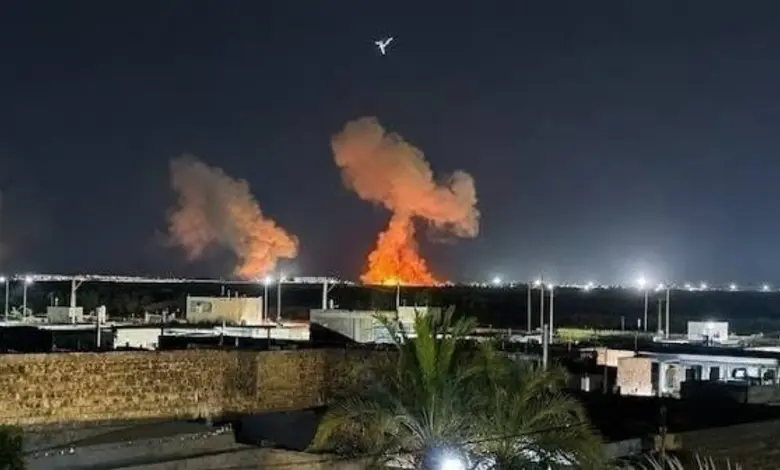
Tehran: A new wave of explosions shook several parts of Iran overnight after the United States launched fresh airstrikes targeting military sites, further escalating a conflict that has pushed the region closer to a broader war.
Explosions were reported in Tehran, Tabriz and other areas, with Iranian state media confirming that air defence systems had been activated in response to the attacks. While the full extent of the damage was not immediately clear, the strikes marked another significant escalation in an already voilate confrontation between Washington and Tehran.
The US has said its operations are focused on military infrastructure associated with Iran’s missile, drone and command capabilities. American officials argue the strikes are intended to reduce Iran’s ability to carry out further attacks against US forces and allies in the region.
Iran, however, has strongly condemned the latest bombardment, calling it a violation of its sovereignty and warning that it will continue to respond. Officials in Tehran have accused Washington of inflaming tensions instead of supporting diplomatic efforts to end the crisis.

The latest strikes come after days of tit for tat military action that has spread across the Middle East. Iran has previously targeted US military facilities and interests in the Gulf, while regional security has deteriorated amid fears that the conflict could spill over into neighbouring countries.
Attention has also turned to the Strait of Hormuz, one of the world’s busiest oil shipping routes. Any disruption to traffic through the narrow waterway could have significant consequences for global energy markets, prompting governments and shipping companies to closely monitor the situation.
The conflict has also drawn in Iran backed armed groups. Yemen’s Houthi movement has threatened further action against shipping linked to regional rivals, adding another layer of uncertainty to an already fragile security environment.
Diplomatic efforts to ease tensions have so far produced little progress. Several countries have urged both sides to exercise restraint, warning that continued military escalation increases the risk of a wider regional conflict with serious humanitarian and economic consequences.
Security analysts believe the repeated exchange of attacks leaves little room for error. With multiple state and non state actors involved, even a limited incident could rapidly trigger a broader confrontation.
Meanwhile, emergency services in affected areas of Iran continued assessing damage following the overnight explosions. Officials have yet to release a comprehensive assessment of casualties or infrastructure losses, and independent verification remains difficult as the situation continues to develop.
With neither Washington nor Tehran showing any sign of backing down, the Middle East remains on edge. The coming days are expected to be crucial in determining whether diplomatic pressure can slow the escalation or whether the conflict moves into an even more dangerous phase.
ALSO READ: Iran Threatens To Shut Strait Of Hormuz Amid Rising US Military Pressure