
Nepal Flood Toll Climbs to 469 as China Warns of Further Risk from Barrier Lake
More than 469 people have been killed and nearly 1,500 remain missing after a massive flash flood struck Nepal this week. Authorities continue search efforts amid a fresh warning of potential further catastrophe from across the border in Tibet.
Indians account for the largest group of missing foreigners, with tourism board figures listing 178 Indian nationals unaccounted for and 11 others rescued. Many of those still missing are foreign tourists, including trekkers and Hindu pilgrims travelling to the sacred Mount Kailash.
Chinese authorities have issued a Level-IV alert along the Tibet-Nepal border. A barrier lake formed by a mudslide on Wednesday at the confluence of the Chhochen Khola and Purepu Tsangpo rivers now holds an estimated two million cubic metres of water. Continued rainfall could increase the volume to around three million cubic metres, raising the risk of a breach. These rivers form part of the Bhote Koshi system that flows into Nepal. A breach could send floodwaters downstream, threatening areas including the Gyirong Port border crossing.
Rescue teams and military helicopters are searching mountainous sections of the Nepal-China border, where a torrent of water and mud several storeys high swept through communities following a glacier collapse. The flood washed away buildings and bridges. Hundreds of people have been displaced across the region.



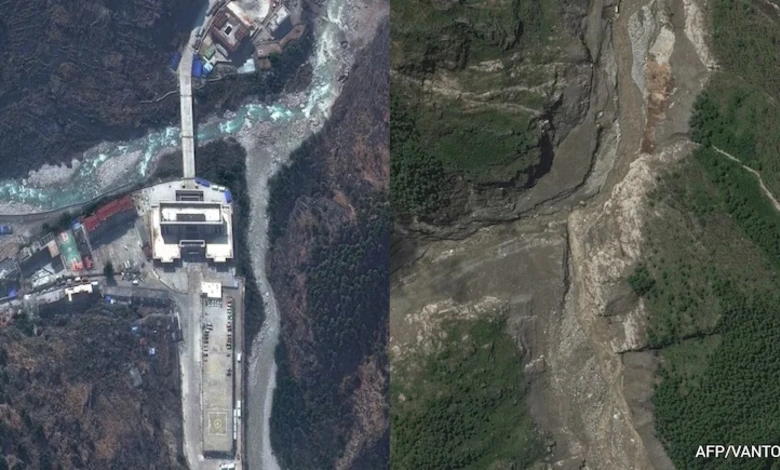
Satellite imagery confirms that the Rasuwagadhi border crossing has been completely destroyed, with the valley floor scoured by the glacial flood. Aerial views also show the expanding barrier lake, prompting official warnings of a possible dam break.
The Himalayan valleys, home to many of the world’s highest peaks and remaining glaciers, remain especially vulnerable to such events. Melting glaciers linked to climate change have increased the frequency of flooding and landslides in the area.
Nepal’s government has declined offers from several countries to send search-and-rescue teams, stating that its own security agencies are capable of handling operations. Officials have indicated a preference for cash contributions through a single channel at this stage, with additional support to be sought during the reconstruction phase. Several nations have already pledged financial assistance.