
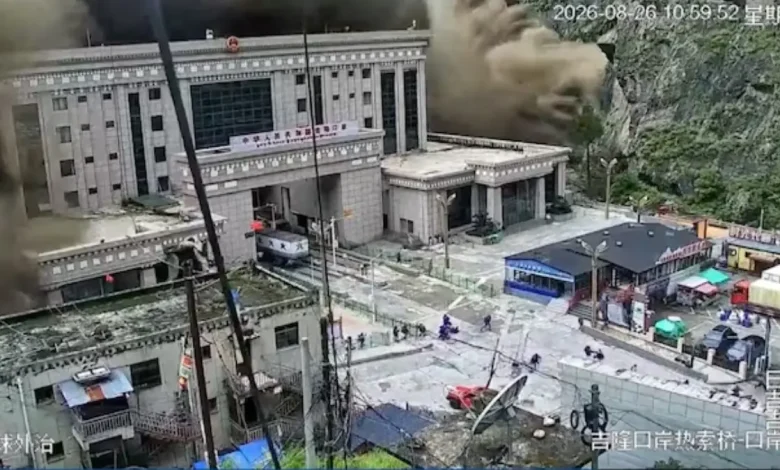
The catastrophic flooding that struck the Nepal-China border region earlier this week has claimed at least 750 lives, with more than 3,000 people still unaccounted for, according to the latest official figures. In Nepal, the death toll has risen to 734, while Chinese authorities have confirmed 16 fatalities in the Tibet region. Thousands remain missing on both sides of the border, including hundreds of foreign nationals.
Rescue teams are focusing intensely on hydropower project tunnels where more than 900 workers are believed to be trapped. At the Trishuli-3A site, emergency crews have drilled holes into a buried tunnel stretching several kilometers and are pumping in air, light, and food. Officials report no communication yet with anyone inside, though efforts continue around the clock with support from Chinese and Indian specialists. Excavators are clearing mud and sludge, and additional equipment is being brought in to break through other access points.
A new landslide detected on Saturday evening created another barrier lake on a river near the disaster zone, prompting the temporary evacuation of some rescuers on the Chinese side. Authorities are monitoring the situation closely after an earlier barrier lake began overflowing.
In Nepal’s Chitwan district, workers in protective gear are preparing a mass burial site to handle the large number of bodies, many of which remain unidentified. Local authorities face significant challenges managing the volume of remains as recovery operations continue.



The United States has increased its humanitarian assistance to $3.6 million to support relief efforts in the affected areas. Embassies are coordinating to assist citizens and aid disaster response.
The disaster was triggered by the collapse of a large section of glacier and rock on Langtang Lirung mountain in northern Nepal. The resulting torrent of ice, water, rock, and debris surged through narrow valleys, destroying homes, infrastructure, power plants, bridges, and roads in its path. Experts note the event was significantly larger in scale than recent floods in the region, highlighting growing risks for communities living downstream of glaciers in the warming Himalayas.
Search and recovery operations remain underway as teams work to locate the missing and provide support to survivors and affected communities.