
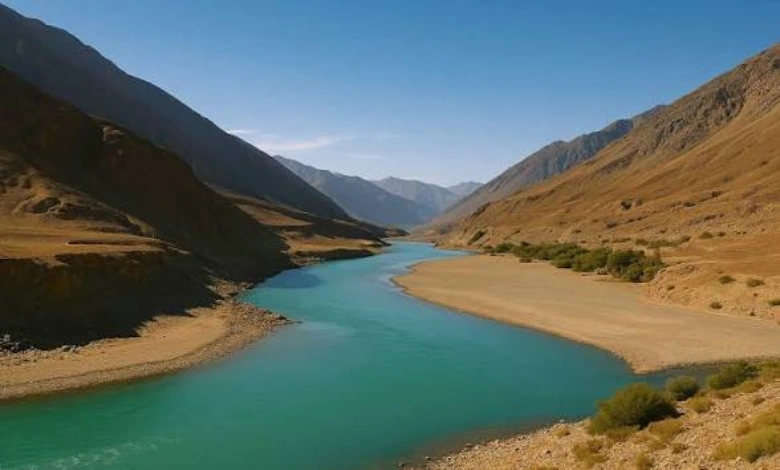
India has remained firmed that the Hague-based Permanent Court of Arbitration “has no jurisdiction on India’s sovereign decisions” after urging New Delhi to respect the water-sharing agreement with Pakistan, and the suspension of the Indus Waters Treaty is still in effect.
The Court of Arbitration, the oldest permanent court for international disputes in the world, further declared that the pact between the two arch-rivals of the subcontinent remained completely in effect and that India had no grounds for terminating or suspending the accord.
The Indus Waters Treaty, which was signed in September 1960, was intended to regulate how India and Pakistan shared the Indus River system.
India took a number of punitive actions against Pakistan, including suspending the water-sharing agreement, one day after the terror incident in Pahalgam on April 22 of last year, which resulted in 26 fatalities.


“This so called Court was constituted by the World Bank in patent breach of the terms of the Treaty and India categorically rejects its so-called award, just as it has firmly rejected all prior pronouncements by this illegally constituted body,” the Ministry of External Affairs said in a statement, reiterating its long-standing belief that “blood and water cannot flow together.”
New Delhi has made it clear that treaty operations will remain suspended until Islamabad takes verifiable, irreversible action to destroy cross-border terror networks operating out of its territory.
The statement emphasizes that India has “consistently maintained that the very establishment of this alleged arbitral body constitutes a grave violation of the Indus Waters Treaty” and has never acknowledged the existence of this “illegally-constituted body” in legal terms.
Due to concerns over the design of India’s Kishenganga and Ratle hydropower dams on the western rivers of the Indus system, Pakistan had requested arbitration.
From the beginning, India has opposed the arbitration procedure.
New Delhi contends that such issues are technical and ought to be reviewed by a Neutral Expert in accordance with the treaty’s provisions. India claims that allowing a Court of Arbitration to look into the same concerns at the same time violates the agreement’s dispute-resolution procedures.
India insisted that it “has refused to take any cognizance of its earlier pronouncements” and that it has never appeared before this body.
“This so-called Court of Arbitration has absolutely no authority to rule on the sovereign choices of India. It said that “India’s decision to hold the Indus Waters Treaty in abeyance remains in force” and that “its pronouncements, now or in the future, will have no effect on India’s actions in connection with the projects being undertaken by India.”
Also Read – PM Modi Meets Iranian President Pezeshkian In Kyrgyzstan