
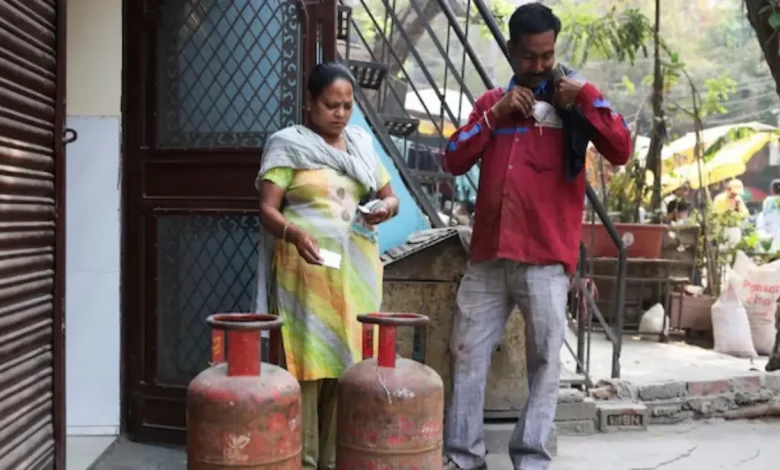
The escalating US-Iran confrontation has once again spotlighted India’s heavy reliance on the Strait of Hormuz, the narrow maritime passage through which a substantial portion of the world’s oil and liquefied natural gas flows. As one of the largest net importers of energy, India sources roughly 90% of its crude oil, over 60% of its LPG, and about 50% of its LNG from international markets, with West Asia remaining the dominant supplier.
According to the Global Trade Research Initiative (GTRI), in 2025 West Asian countries accounted for 48.7% of India’s crude oil imports, 68.4% of LNG arrivals, and more than 91% of LPG supplies. Any prolonged disruption in the Strait therefore translates into higher import costs and market volatility, even when outright physical shortages are avoided in the near term.
India has steadily strengthened its energy buffers in recent years. Strategic Petroleum Reserves (SPR) currently hold approximately 5.33 million tonnes of crude oil—equivalent to 9–10 days of national consumption—with underground caverns at Visakhapatnam, Mangaluru, and Padur operating at around 80% capacity. When commercial inventories are included, the country can draw on stocks sufficient for 40–45 days of crude supply in the event of a complete Hormuz closure, according to cargo-tracking estimates. Commercial stocks of petrol and diesel provide an additional 25 days of cover, LPG inventories last 25–30 days, and LNG terminals hold roughly 10 days of supply.
Sourav Mitra, Partner – Oil & Gas at Grant Thornton Bharat, observes that these measures have meaningfully reduced the probability of acute shortages, although elevated prices during disruptions remain a persistent risk.



LPG security has been bolstered by the commissioning of underground storage facilities on both coasts, including the HPCL Mangalore cavern and the existing Visakhapatnam site, together offering about 140,000 tonnes of emergency storage. Natural gas, by contrast, has no dedicated national strategic reserve; discussions are under way to mandate that terminal operators maintain a 10% buffer earmarked for government priority use during crises.
Looking ahead, experts urge faster implementation of several protective measures. Phase-II of the SPR programme seeks to raise total capacity to 11.83 million tonnes, potentially adding 17–18 days of cover, although land-acquisition delays continue to affect the Chandikhol and Padur-II projects. For LNG, finalising and notifying the 10% buffer regulation would establish a cost-effective national backstop at existing terminals.
Diversification remains critical. Expanding long-term LNG contracts beyond Qatar (through Petronet) to include greater volumes from the United States, Australia, and West Africa, acquiring equity in production assets outside the Hormuz corridor (following China’s model), and building stronger trading desks equipped for hedging and time-chartered vessel pools would all reduce geographic concentration risk.
Ajay Srivastava of GTRI recommends reviving large-scale, long-term crude supply agreements with Russia, which once supplied up to 35% of India’s imports, to lock in stable volumes and prices. Gaurav Moda of EY-Parthenon India emphasises prioritising SPR expansion, identifying additional reserve locations, enforcing higher LNG storage obligations, and developing dedicated underground gas storage projects led by GAIL, ONGC, and OIL.
ALSO READ : How India’s Restaurant Industry Is Battling The LPG Crisis Amid The West Asia Conflict
Similar enhancements for LPG—new storage sites and regional infrastructure upgrades—would further insulate vulnerable segments. Adopting a multi-layered approach inspired by Japan and China, which combines government reserves, mandatory private holdings, and overseas stockpiling, would position India to better withstand extended geopolitical turbulence in global energy markets.
While the immediate concern centres on cost inflation rather than outright scarcity, these structural steps would significantly enhance long-term resilience.