
BRICS Summit 2026: India Treads Carefully as Pakistan, Bangladesh Push for Entry While China Backs a Bigger Bloc
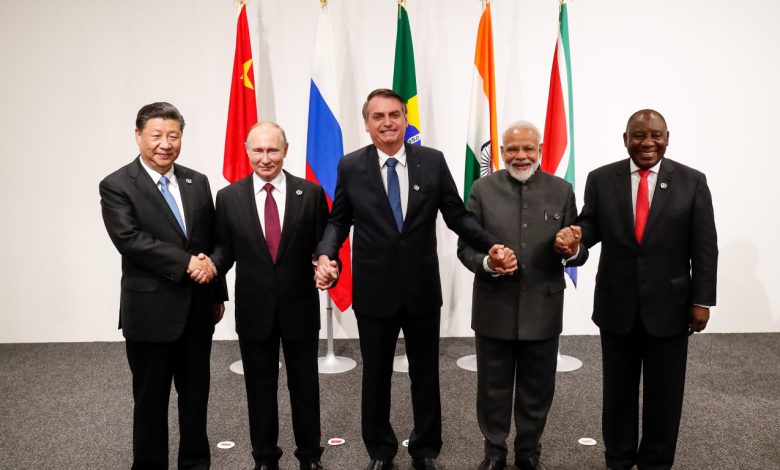
The 2026 BRICS Summit, set for September 12–13 at Bharat Mandapam in New Delhi under India’s chairmanship, arrives at a defining moment for the grouping. What began as a modest coalition of emerging economies has grown into a wide-ranging platform representing much of the Global South. Now, with the bloc already expanded to 11 full members and a long line of nations waiting at the door, a central question looms over this year’s summit: should BRICS keep growing, or is it time to pause and strengthen what already exists?
At present, BRICS counts 11 full members alongside 10 officially designated Partner Countries. More than 30 additional nations have signalled interest in joining. The Partner Country arrangement lets countries such as Belarus, Bolivia, Cuba, Kazakhstan, Malaysia, Nigeria, Thailand, Uganda, Uzbekistan and Vietnam engage in BRICS cooperation without holding full membership rights. Beyond these, nations pressing for deeper involvement include Türkiye, Azerbaijan, Pakistan, Bangladesh, Algeria, Venezuela, Colombia, Bahrain, Cambodia, Laos and a number of African countries.
India’s Position: Support for Growth, But With Conditions
India backs BRICS expansion in principle but has taken a measured, criteria-driven stance on it. New Delhi supports broader representation for the Global South, yet it has consistently maintained that any future expansion must follow criteria agreed upon by all existing members. India has also insisted that prospective entrants maintain friendly ties with every current BRICS nation. This matters deeply to New Delhi, which wants BRICS to remain focused on economic cooperation and stronger representation within global institutions not to morph into a bloc defined by opposition to the West or the United States. India continues to balance its role within BRICS with its strategic partnerships with the United States, Europe and other Western nations, underscoring its commitment to strategic autonomy.
China Champions Expansion, Russia Urges Caution
China stands out as one of the most vocal supporters of enlarging BRICS. Beijing views a larger membership as a way to boost the combined influence of emerging economies and position BRICS as a counterweight to Western particularly American global dominance. China has also thrown its weight behind Pakistan’s bid for entry.




Russia, too, has historically favoured expansion, seeing the bloc as a valuable channel for building economic and diplomatic ties beyond the West. However, following the recent influx of new members, Moscow has begun advocating a more restrained approach going forward. The reasoning is that BRICS needs time to absorb and adjust to its newly expanded ranks. Rather than pushing for another round of full memberships right away, Russia has called for consolidating the current group and refining its internal functioning.
Also Read:PM Modi And Russian President Putin To Hold Bilateral Meeting On Friday
Brazil and South Africa Weigh In
Brazil has similarly adopted a cautious stance, wary of how unchecked expansion could dilute the bloc’s identity and complicate its decision-making. Brasília has stressed the need for consensus, cautioning against BRICS growing so large that reaching agreement on shared priorities becomes difficult.
South Africa, by contrast, has largely welcomed expansion especially where it boosts Africa’s voice in global governance. The entry of Egypt and Ethiopia has already strengthened Africa’s footprint within BRICS, giving South Africa greater leverage in its push for a more representative international order.
Pakistan and Bangladesh: Where Economics Meets Geopolitics
Pakistan’s bid for BRICS membership illustrates just how tangled the expansion debate can get once geopolitics enters the picture. Islamabad has formally applied for membership, viewing it as a chance to diversify its trade relationships. However, India’s objections have so far blocked Pakistan’s path to full membership, even as China’s backing lends considerable weight to Islamabad’s case. The friction between India and Pakistan, layered atop the broader India-China rivalry, makes Pakistan’s potential entry an especially delicate matter. It also raises a larger question the bloc will have to confront: should BRICS prioritise economic representation, or should geopolitical compatibility among members carry equal or greater weight?
Bangladesh finds itself in a similar position. Dhaka has expressed strong interest in joining BRICS, viewing membership as a route to expanded trade, access to development financing, and a stronger foothold within the emerging economic architecture of the Global South. Like Pakistan, Bangladesh’s potential inclusion would reignite the same debate whether economic merit or geopolitical alignment should guide the bloc’s next phase of growth.