
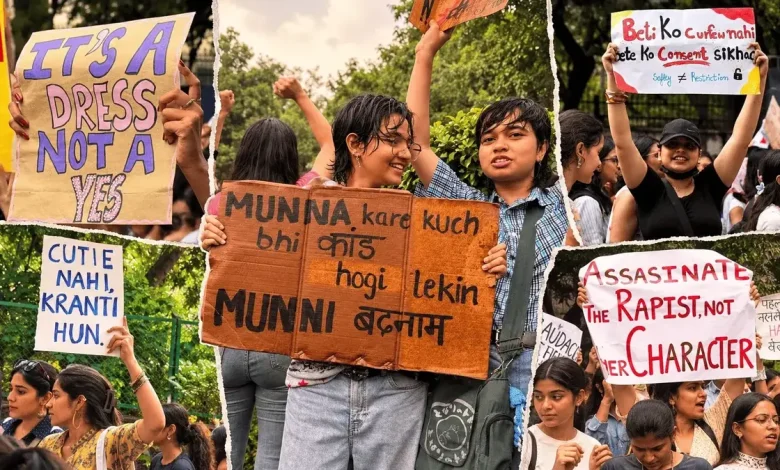
New Delhi: “Ek kachori, do samosa, in mardon ka kya bharosa” may sound like a playful rhyme, but behind the catchy words is a serious message that has found its way from Delhi’s streets to social media. Young women protesting sexual violence, victim blaming and restrictions on their freedom are using humour, food references and rhyming slogans to make their anger heard, challenging the idea that women should have to limit their movements in order to stay safe.
The latest wave of demonstrations was triggered by the alleged gang rape of a 17 year old girl at Aastha Kunj Park in South Delhi on September 21. According to police, three men allegedly posed as policemen before assaulting the teenager. The incident led to the arrest of the accused and renewed concerns about the safety of public parks, particularly after dark. It also became a rallying point for students from several Delhi University colleges, who took to the streets demanding safer public spaces, better lighting, stronger security and accountability from authorities.
But what has made these protests particularly distinctive is the language being used. Instead of relying only on traditional slogans demanding justice, young protesters have created lines that are deliberately catchy, humorous and easy to remember. “Rapist ko andar karo, ladkiyon ko nahi” is one such slogan, directly questioning the idea that restricting women is an acceptable response to sexual violence. Other slogans ask people to examine a boy’s intentions rather than constantly monitoring a girl’s location, challenging a culture in which women are frequently told how they should dress, where they should go and when they should return home.
The slogans have quickly moved beyond the protest sites. Videos of students chanting them have spread across Instagram and other social media platforms, giving the demonstrations a distinctly Gen Z character. What might once have remained a chant heard by people at a protest can now reach thousands or even millions of viewers within hours. The result is a form of activism that combines street demonstrations with the language of memes, short videos and viral internet culture.


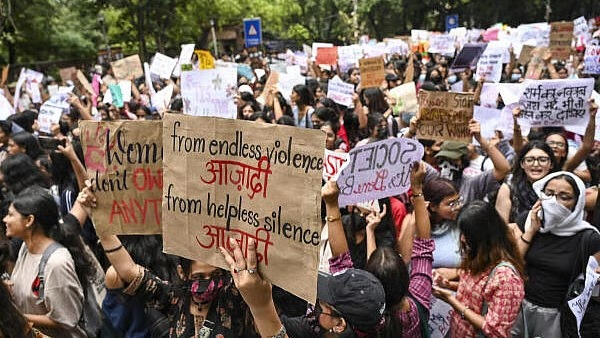
For the women involved, however, the humour does not mean the issue itself is being treated lightly. Aanya Wig, a 26 year old lawyer and Lady Shri Ram College alumna who has been vocal about the protests online, has said that she received thousands of rape threats and abusive messages after speaking publicly about women’s safety. Her experience has itself become part of the wider conversation, highlighting how women can face sexualised abuse even while speaking about the problem of violence against women.
The protests have also challenged the idea that restricting women’s movement is an effective solution to sexual violence. Following the South Delhi park assault, authorities discussed measures including improved lighting, surveillance and patrolling, while restrictions on access to parks after sunset became part of the safety debate. Protesters have questioned whether limiting women’s access to public spaces simply transfers the burden of preventing crime onto those who are most vulnerable to it.
Students from institutions including Lady Shri Ram College, Miranda House and Gargi College have called for better street lighting, safer public transport and stronger security. Their demands reflect concerns that extend beyond one incident or one location. For many young women, safety is a daily calculation involving which route to take, whether public transport will be available, how late they can stay out and whether they can travel alone.
At the centre of the protests is a long standing frustration with victim blaming. After incidents of sexual violence, women are often asked where they were, what they were wearing, why they were outside at a particular hour or why they were travelling alone. Protesters argue that such questions can shift attention away from the alleged perpetrator and place yet another burden on women.
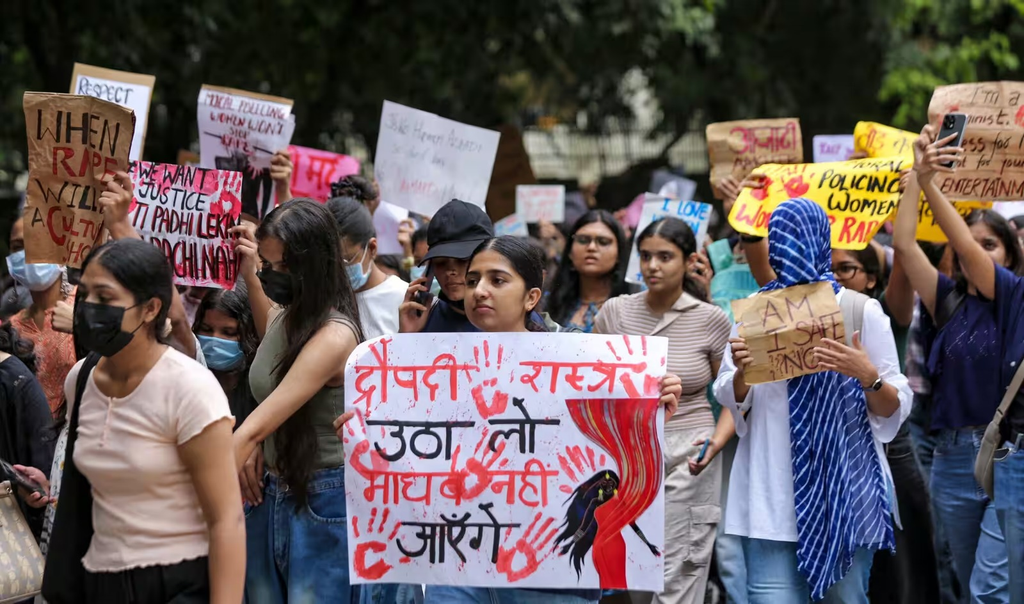
The viral slogans therefore represent more than an attempt to attract attention online. They have become a way for young women to challenge the language traditionally used around women’s safety. Instead of accepting that freedom must be sacrificed for protection, protesters are asking why public spaces cannot simply be made safer for everyone.
The movement has also attracted responses from outside the protest groups, including male social media creators who have shared or adapted some of the rhyming slogans. At the same time, protesters have rejected suggestions that their demonstrations are primarily about creating viral Instagram content. For them, social media is a tool for amplifying a message that begins with real concerns about harassment, unsafe streets, inadequate lighting, public transport and sexual violence.
The issue has now entered political discussion as well. Union minister Shivraj Singh Chouhan reacted to the “kachori-samosa” slogan and questioned why women had reached a point where they felt they could not trust men, calling for introspection among men, boys and society. His comments have added another dimension to a debate that is increasingly moving beyond individual cases and towards questions about how society responds to violence against women.
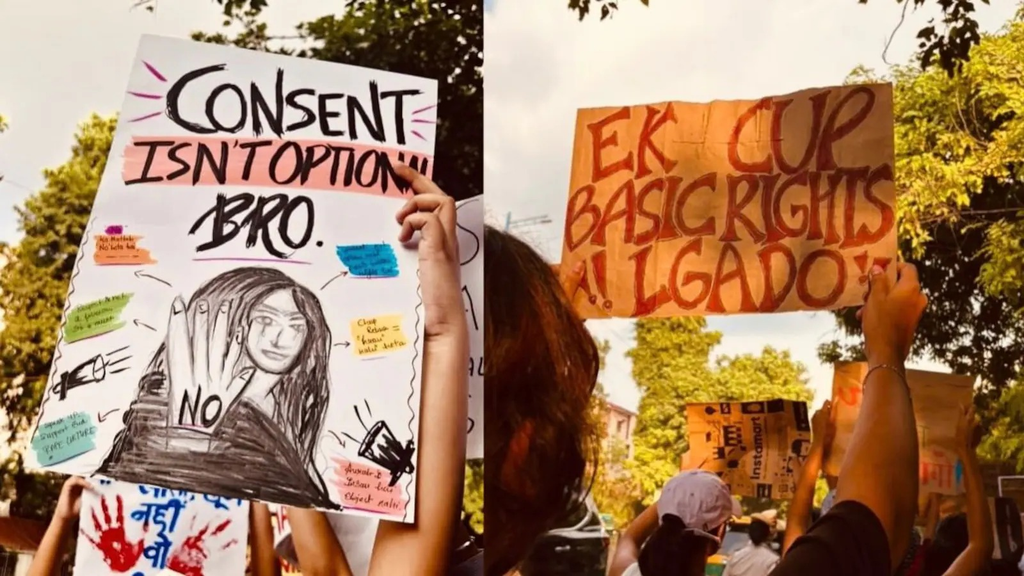
The protests have also unfolded amid wider concern over crimes against women and allegations involving the treatment of women journalists during demonstrations. These developments have strengthened calls for accountability not only from individuals accused of sexual misconduct but also from institutions responsible for ensuring that women can participate safely in public life.
Ultimately, the popularity of “Ek kachori, do samosa” lies in the contrast between its humorous wording and the seriousness of its message. The slogan is easy to remember precisely because it sounds like a joke, but what it expresses is years of frustration with being told that women can stay safe only by changing their own behaviour.
For the young women behind these protests, the demand is straightforward they want to study, work, travel, meet friends, use public spaces and return home without having to constantly calculate the risk of violence. The food based rhymes may be new, but the demand behind them is not. By turning anger into humour and protest into shareable digital content, Delhi’s women are making an old question impossible to ignore why should women have to give up their freedom in order to feel safe?
ALSO READ: Congress Claims Job Anger Behind Sitharaman Speech Disruption, Naidu Hits Back