
Air India Gets DGCA Nod to Extend Pilot Duty Hours as Middle East Airspace Curbs Force Longer Flight Routes
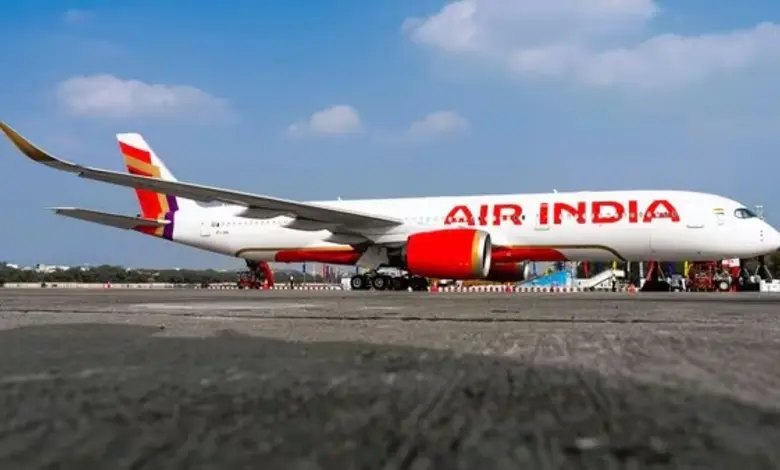
Air India has received a temporary exemption from the Directorate General of Civil Aviation (DGCA) on pilot flight duty time limitations (FDTL) for select international flights, after mandatory rerouting of long-haul services due to airspace restrictions over the Middle East stemming from the ongoing US-Israel-Iran conflict.
With Iranian and Iraqi airspace closed off, sources confirmed the relaxation will remain in effect until April 30. Under the exemption, two-pilot operations will be permitted to extend flight hours and duty periods: Flight Time (FT) can increase by 1 hour 30 minutes, up to a maximum of 11 hours 30 minutes, while the Flight Duty Period (FDP) may be extended by 1 hour 45 minutes, reaching up to 14 hours 45 minutes.
Specific details for individual flights will be communicated through internal notices. Additionally, crew members will receive a supplementary four-hour rest period beyond the minimum rest requirement prescribed under the applicable Civil Aviation Requirements (CAR).
Air India had approached the regulator for these exemptions after Gulf airspace curbs forced the airline onto longer, indirect routes for multiple international services, creating significant operational scheduling challenges. The FDTL relaxation is aimed at easing the impact of current restrictions on eastbound flights. Neither Air India nor the DGCA offered any comment on the norm relaxations.



For context, Flight Time (FT) refers to the total duration from when an aircraft begins moving for takeoff until it comes to a full stop after landing. The Flight Duty Period (FDP) starts when a crew member is required to report for duty and concludes once the engines are shut down at the end of their final flight in that duty cycle. It remains unclear whether IndiGo has been granted similar exemptions for its long-haul operations.
Rising Middle East Tensions Add to Airline Disruptions
The development comes against a backdrop of escalating tensions across the Middle East. Gulf countries reported fresh attacks on Sunday, a day after Iran called for evacuations at three major UAE ports marking the first instance of Tehran issuing threats against non-US assets in a neighbouring country. Iran accused the United States of using UAE ports and facilities to carry out strikes on Kharg Island, Iran’s primary oil export hub, though no supporting evidence was provided.
In parallel, Israeli strikes in Lebanon have deepened the humanitarian crisis in the region, with more than 800 people reported dead and over 8,50,000 displaced.
The wider conflict involving the US, Israel, and Iran which began on February 28 has resulted in sweeping Middle East airspace restrictions, significantly disrupting airline operations across the region.
Several carriers have reduced or suspended services to affected destinations. Air India has been rerouting flights through Oman, southern Saudi Arabia, and Egypt to reach Europe and North America. Certain ultra-long-haul routes have also incorporated technical stops in Rome as part of the revised flight paths.