Washington: Over six weeks after the outbreak of the US-Iran war, the two sides are set to engage in indirect peace negotiations this weekend in Islamabad, facilitated by Pakistan. A two-week fragile ceasefire is currently holding, though tensions persist with ongoing regional developments. Pakistani Prime Minister Shehbaz Sharif extended the invitation, which both nations accepted.
The discussions are scheduled to commence on Saturday morning Pakistan time, according to an Al Jazeera report. The Iranian delegation reached Islamabad late Friday night, while the US team, headed by Vice President JD Vance, was en route. The venue remains unconfirmed officially, but an AFP report points to the Serena Hotel as a possible location.
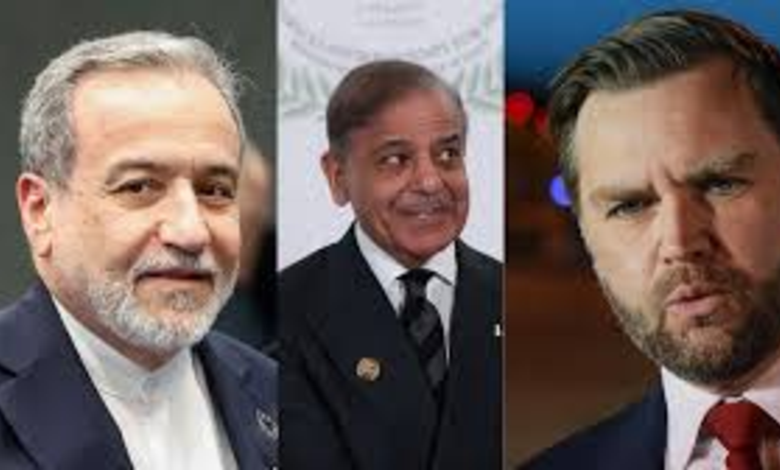
Leading the US delegation is Vice President JD Vance, accompanied by special envoy Steve Witkoff and Jared Kushner, per AFP. This represents the highest-level US engagement with Iran since the 2015 nuclear deal negotiations. Witkoff previously conducted several rounds of Oman-mediated discussions with Iranian Foreign Minister Abbas Araghchi before the conflict halted them.
.@POTUS on talks in Islamabad: "We'll find out what's going on. They're militarily defeated and now we're going to open up the [Strait]… You have a good team and they meet tomorrow. We'll see how it all works out." pic.twitter.com/5Ol1SHZCKi
— Rapid Response 47 (@RapidResponse47) April 10, 2026
On the Iranian side, Foreign Minister Abbas Araghchi and parliamentary speaker Mohammad Bagher Ghalibaf, along with additional security and economic officials, have arrived, as stated by Iranian state television and Pakistani authorities. IRIB underscored Tehran’s stance that talks would proceed only if its conditions, including a Lebanon ceasefire, are addressed.
The agenda revolves around a US 15-point proposal and Iran’s 10-point response. Washington seeks the surrender of Iran’s enriched uranium stockpile and reopening of the Strait of Hormuz. Tehran demands control over the strait with vessel tolls, an end to regional military actions, and full sanctions relief. It is uncertain if Lebanon will feature formally in discussions.
Pakistan’s mediation stems from its balanced ties: Iran was the first to recognize Pakistan in 1947, they share a 900-km border with strong cultural links, and Islamabad has been a Major Non-NATO Ally of the US since 2004. Pakistani Army Chief Asim Munir held recent calls with both sides, while China’s support was secured for the effort.
Security in Islamabad is heightened with a two-day public holiday declared. Talks are expected to follow an indirect format, with Pakistani officials shuttling between separate rooms for the delegations, mirroring prior Oman-mediated sessions.
Also Read: Iran’s New Regime Is More Extreme : IDF