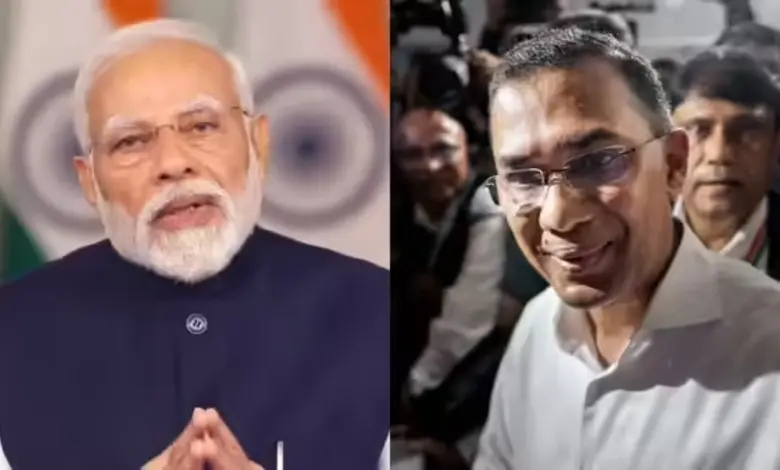
In a significant diplomatic gesture, Indian Prime Minister Narendra Modi has congratulated Tarique Rahman, chairperson of the Bangladesh Nationalist Party (BNP), following the party’s commanding victory in Bangladesh’s parliamentary elections.
The BNP, under Rahman’s leadership, secured a decisive mandate, with preliminary indications pointing to a substantial majority that positions Rahman as the likely next prime minister. While official final results were pending at the time of reporting, the outcome marks a major political shift in Dhaka, ending years of interim governance and restoring civilian rule after previous turmoil.
Prime Minister Modi conveyed his message via a post on X, stating: “I convey my warm congratulations to Mr Tarique Rahman on leading BNP to a decisive victory in the parliamentary elections in Bangladesh. This victory shows the trust of the people of Bangladesh in your leadership.”
He further affirmed India’s commitment to bilateral ties, declaring that India would “continue to stand in support of a democratic, progressive and inclusive Bangladesh.” Modi expressed anticipation for collaboration, adding that he looked forward to working with Rahman “to strengthen our multifaceted relations and advance our common development goals.”
ALSO READ : BNP Poised For Decisive Victory In Bangladesh’s Landmark Post-Hasina Election
The congratulations come amid a complex backdrop in India-Bangladesh relations. Ties had been robust during the long tenure of former Prime Minister Sheikh Hasina and her Awami League, which emphasized cooperation on trade, connectivity, border management, and water-sharing issues. Hasina’s ouster in 2023 amid widespread protests led to an interim administration under Muhammad Yunus, during which bilateral relations encountered strains, including concerns over border security, migration, and minority protections.
The BNP’s return to power revives memories of its earlier rule from 2001 to 2006, a period marked by certain challenges in cross-border dynamics. However, Rahman has signaled intentions for renewed engagement, including commitments to counterterrorism cooperation, resolving outstanding matters like Teesta water sharing, and safeguarding minority communities, including Hindus.
Modi’s prompt outreach underscores New Delhi’s pragmatic approach to engaging the new leadership and fostering stability in the neighboring country. The statement reflects India’s consistent emphasis on supporting democratic processes and inclusive governance in Bangladesh, as reported.
This development paves the way for renewed dialogue between the two South Asian neighbors, with potential implications for regional security, economic partnerships, and shared priorities.
-
-

-
-