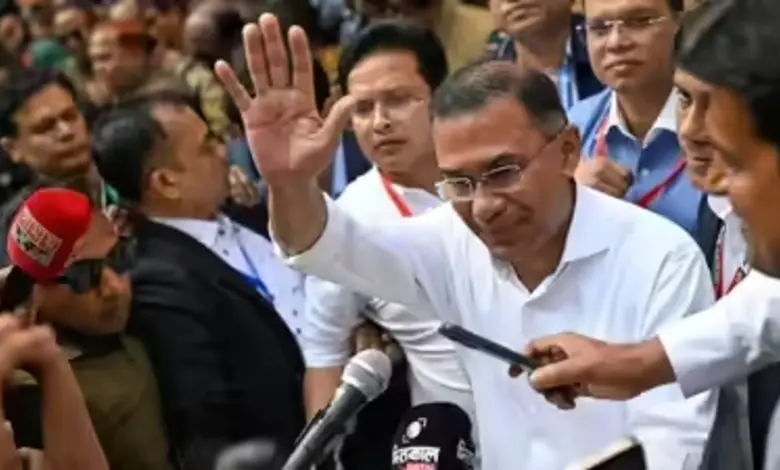
In Dhaka, vote counting progressed on Thursday following Bangladesh’s first parliamentary election since the 2024 July Uprising that forced longtime Prime Minister Sheikh Hasina from power. The Bangladesh Nationalist Party (BNP), under the leadership of Tarique Rahman—son of the late former Prime Minister Khaleda Zia—emerged with a commanding advantage.
Provisional results indicated the Tarique Rahman-led BNP had secured victories in 120 of the 300 parliamentary seats, while leading in an additional 55, pushing it well past the halfway threshold toward a majority. This positioned the party to form the next government, replacing the interim administration headed by Muhammad Yunus.
The hardline Islamist party Jamaat-e-Islami, described as Bangladesh’s largest Islamist force and often characterized as anti-India, along with its allies, lagged significantly with only 38 seats. Jamaat chief Shafiqur Rahman signaled acceptance of the outcome, stating his party would avoid “politics of opposition” for its own sake and instead pursue “positive politics.”
The election unfolded amid a notably subdued voter turnout of just 47%, a figure analysts viewed as underwhelming given the interim government’s assurances of a free, fair, and inclusive process aimed at ushering in a reformed Bangladesh. This marked one of the lowest participation rates in recent decades for a full national poll. For context, turnout dipped below 50% only in previous instances when the opposition boycotted, alleging rigging risks under Hasina’s rule—such as 40% in 2014 and 42% in 2024—while earlier elections like 2008 (87%) and 2018 (over 80%) saw far higher engagement.
ALSO READ : India’s Parliament Pays Tribute Late Bangladesh Leader Khaleda Zia on First Day of Budget Session
The Awami League, Hasina’s party, was barred from participating, and its traditional boat symbol was absent from ballots for the first time in three decades. Hasina dismissed the exercise as a “well-planned farce” orchestrated by the Yunus administration, arguing the low participation reflected public rejection of an Awami League-free contest.
Polling occurred across 299 constituencies (one deferred due to a candidate’s death) and coincided with a referendum on an 84-point reform package under the July National Charter 2025, where voters indicated approval or disapproval of proposed changes.
The atmosphere remained largely peaceful, though isolated violence occurred, and reports highlighted a relatively low turnout among minority communities, particularly Hindus, in the wake of attacks following Hasina’s ouster in 2024. A minority leader noted a diminished presence, with assessments ongoing.
Tarique Rahman claimed victories in both constituencies he contested—Bogra and Dhaka-17—bolstering expectations that he could assume the prime ministership. While the BNP historically maintained a strained relationship with India due to contrasts with the Awami League’s closer ties to New Delhi, recent signals suggest a softening stance, including India’s outreach following Khaleda Zia’s funeral last year.