
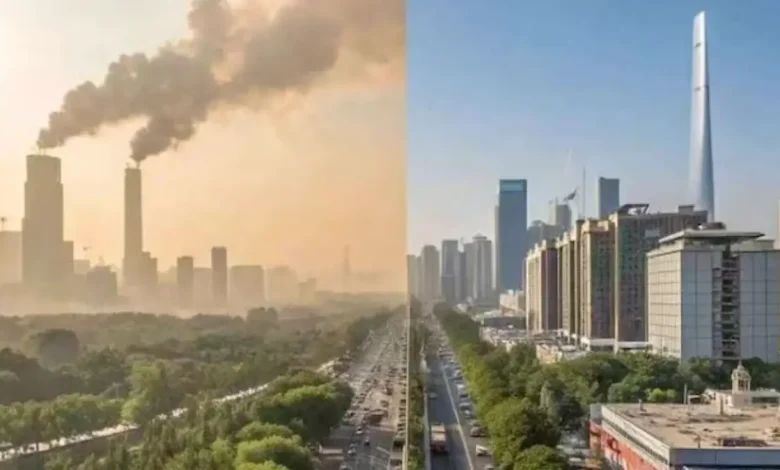
New Delhi : Hazardous air quality, dense smog, and a rise in respiratory illness – it’s the same story every winter in Delhi. On the other hand, China’s capital, Beijing, once notorious as the “smog capital of the world”, has improved its air quality in just over a decade. In an extensive post on X, along with before and after images of Beijing, Chinese embassy spokesperson Yu Jing underscored that both China and India know the struggle with air pollution amid rapid urbanisation.
Her post included screenshots of the air quality reading in both cities on December 15, which showed an AQI of 447 in Delhi, while Beijing was breathing significantly cleaner air (AQI 67). Breaking down Beijing’s approach to controlling vehicle emissions, Jing said China adopted ultra-strict emission standards comparable to Euro 6 norms while phasing out old, high-emission vehicles. India has already made it mandatory for all vehicles manufactured after April 1, 2020, to comply with BS-VI emission norms.
The Chinese embassy spokesperson also suggested measures like license-plate lotteries, odd-even and weekday driving restrictions, alongside massive investments in metro and bus networks. Yu Jing also called for a rapid adoption of electric mobility. While Delhi has experimented with the odd-even policy, which entails cars with odd-numbered plates being driven on odd dates and vice versa, it has not brought down pollution levels substantially.
One of the major reasons behind the recurrent pollution crisis in Delhi is a rise in stubble burning in neighbouring states of Punjab, Haryana and Uttar Pradesh. While the Supreme Court has directed coordinated efforts on several occasions, lapses and blame games by the states have put paid to such efforts. The second phase focuses on industrial restructuring. The Chinese embassy pointed out that over 3,000 heavy industries were shut down or relocated.



The embassy suggested transforming vacated factories into parks, commercial zones, cultural and tech hubs. “The former Shougang industrial complex, for instance, was transformed into a major venue for the 2022 Winter Olympics,” it said. To further ease pressure on the capital, Beijing relocated wholesale markets, logistics hubs, and some educational and medical institutions to nearby cities.
Read Also : President Donald Trump’s Gaza Plan : Pakistan’s Military Chief Asim Munir In Spotlight