The debate over India’s E20 petrol rollout intensified on Thursday after protesters claimed they were ready to present six motorists who allegedly experienced vehicle problems after using ethanol-blended fuel, a day after Union Road Transport and Highways Minister Nitin Gadkari challenged critics to produce evidence of such cases.
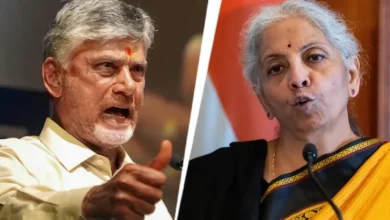
The protesters, led by activist and entrepreneur Tehseen Poonawalla under the banner of Team Bharat, said they had accepted Gadkari’s challenge but insisted that any meeting with the minister should take place in the presence of the media and be livestreamed.
‘We Have Six Such People’: Poonawalla
Speaking in a video message, Poonawalla said he had initially planned to take the motorists to Gadkari’s residence but claimed that Delhi Police had advised him not to do so.
“We accepted the challenge of Nitin Gadkari ji and, according to his challenge, wanted to meet such people whose cars have developed some problem due to E20… We have six such people, but we cannot arrange a meeting with Nitin Gadkari ji. We absolutely cannot go to his house. If we go, we will be detained or arrested,” he said.
Poonawalla urged the minister to grant an appointment, adding that the interaction should be held publicly.
“Sir, you are the one who gave this challenge, but we cannot meet you? Either Delhi Police should arrange a meeting with you, or you should give us an appointment. But we have only one condition that any appointment or conversation or discussion should be in front of the media and live-streamed. We will show you those people whose cars have problems from E20 fuel.”
“I have people with me whose cars have developed issues. Please give me an appointment,” he added.
Gadkari’s Challenge on E20 Fuel
The exchange follows Gadkari’s exclusive interview with India Today TV on Wednesday, in which he defended the government’s Ethanol Blended Petrol (EBP) programme and dismissed allegations that E20 fuel damages petrol vehicles.
“No one has proven that E20 caused damage to any petrol vehicle,” the minister said.
He challenged critics to “name even one person whose car, bike, or scooter failed solely due to ethanol” and said complaints could be submitted to vehicle dealers or his ministry for investigation. Gadkari added that compensation would be provided if ethanol was found to be responsible for any damage.
The minister also rejected allegations of a conflict of interest linked to his family’s involvement in the ethanol industry “I gain nothing from the ethanol policy. My share in ethanol production is just 0.07 per cent. With such a small stake, there is no question of any significant financial benefit,” he said.
According to government data cited during the interview, India currently produces nearly 1,500 crore litres of ethanol annually through around 550 production units.
Conflict of Interest Allegation
Poonawalla disputed Gadkari’s explanation, claiming that the minister’s family continued to have financial interests in the ethanol business.
“Yesterday, you said that your family has only 0.07 per cent share in the ethanol business. Your children, both your sons who are in the ethanol business sir, this is around Rs 50 to 100 crore annually and the ethanol business keeps growing,” he said.
Calling it a conflict of interest, Poonawalla added, “This is a ‘beta badhao’ scheme. With great humility, I am asking you for an appointment.”
Why Are Motorists Protesting Against E20 Petrol?
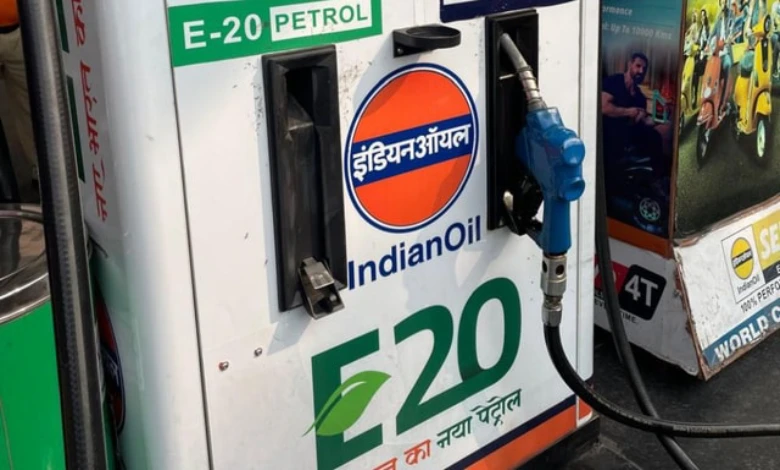
The controversy centres on the government’s Ethanol Blended Petrol (EBP) Programme, which aims to reduce crude oil imports, increase farmer incomes and lower vehicle emissions.
Under the National Policy on Biofuels 2018, India originally planned to achieve 20 per cent ethanol blending by 2030. However, the government advanced the target, achieving nationwide E20 availability in December 2025, with a full rollout across fuel stations in 2026.
The government and industry experts maintain that E20 improves fuel octane ratings and combustion in compatible vehicles.
However, some motorists claim the mandatory rollout has resulted in lower fuel efficiency, increased maintenance costs and damage to fuel system components, particularly in vehicles designed for E10 petrol.
The article also refers to a study by the Automotive Research Association of India (ARAI), which reportedly found that using E20 fuel in E10-compatible vehicles could affect rubber components in fuel systems, although the report has not been made public.
Social media users have also shared claims of reduced mileage, rough idling, clogged fuel systems and vehicle breakdowns after switching to E20 fuel, particularly in vehicles manufactured before 2023.
Protesters maintain they are not opposed to ethanol blending itself but are demanding suitable fuel options for vehicles that were not originally designed to run on E20.
While Gadkari and the government continue to maintain that E20 is safe for compatible vehicles, the debate over its wider implementation and impact on older vehicles remains unresolved.
-
-
-

-