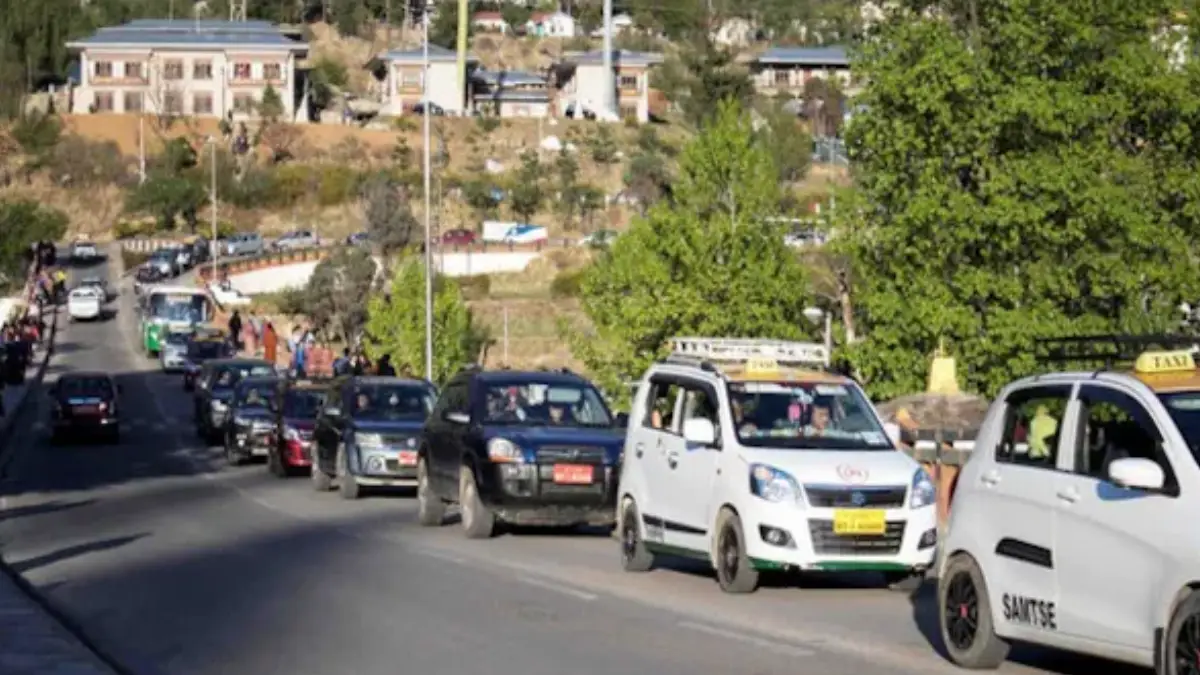
New Delhi : At a time when India’s E20 petrol rollout has triggered a heated debate over its impact on vehicle performance, Bhutan has quietly turned down an offer from Indian Oil Marketing Companies (OMCs) to supply ethanol-blended fuel. Bhutan’s refusal stems from practical concerns. The country’s ageing fuel storage infrastructure is not designed to handle ethanol-blended petrol, while its steep and mountainous terrain demands vehicles that can deliver reliable power and performance.
India’s E20 push has direct implications for Bhutan, which imports all its fuel from India. At present, Bhutan buys higher export-grade petrol and diesel from India, which are costlier than the fuel sold at Indian retail pumps. However, Bhutan’s Department of Trade has declined offers from Indian OMCs — including Indian Oil Corporation, Bharat Petroleum and Hindustan Petroleum — to switch to E20 fuel.
A key concern is Bhutan’s ageing underground fuel tanks. Officials say these tanks are vulnerable to water seepage, which poses a major risk when storing ethanol-blended fuel. Unlike regular petrol, ethanol contains a hydroxyl group, making it highly hygroscopic — meaning it readily absorbs moisture from the surrounding environment. Pure petrol, by contrast, does not absorb water as easily.
As a result, if E20 is stored in tanks prone to water contamination, the fuel can get diluted. Once mixed, separating water from ethanol-blended petrol is not easy. The presence of water can also speed up corrosion in steel tanks and pipelines, raising the risk of long-term engine damage and poorer vehicle performance.
“Considering the existing condition and quality of several of the underground storage tanks, the import and handling of ethanol-blended fuel may pose challenges in ensuring fuel quality,” the Bhutan government told The Bhutanese. Bhutan’s concerns are compounded by geography. Most of its fuel depots are located in mountainous, high-humidity regions, where preventing moisture ingress and condensation is particularly difficult.
The issue comes at a time when India’s ethanol-blending programme is under growing scrutiny. Earlier this week, the government told the Supreme Court that the E20 policy was still an “experiment” and that its impact would become clearer only next year. The remark triggered controversy, after which the government denied making the statement. However, a video of the Attorney General making the remark has since gone viral.
India has already begun testing E25 petrol — a blend containing 25 per cent ethanol — on vehicles, according to a report in The Economic Times. Bhutanese officials, however, say any accidental supply of E20 fuel would be easy to identify, as even slight water contamination would cause the fuel to turn milky. Bhutan’s stance underlines a larger point in the fuel transition debate: a one-size-fits-all approach may not work.
Read Also : Video : Tears Flow As Iran’s Foreign Minister, Speaker Bid Farewell To Ali Khamenei