
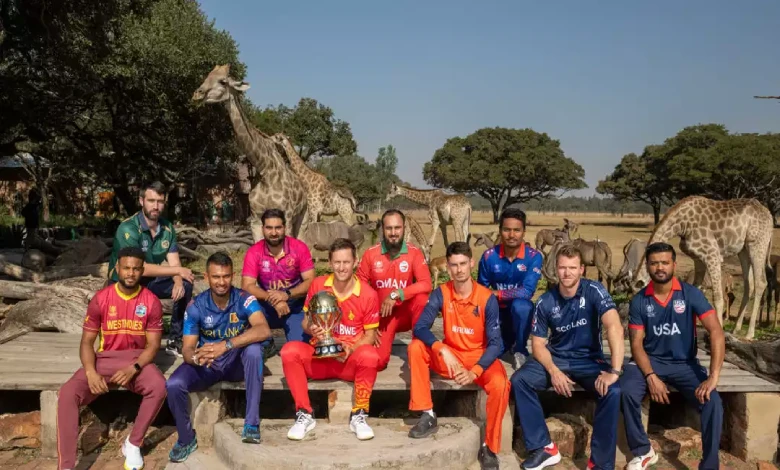
The ICC’s redesigned Men’s ODI World Cup format has drawn criticism from a number of international players and captains. Scott Edwards, the captain of the Netherlands, called it “incredibly disappointing” and claimed that the sport should be generating “more opportunities on the global stage, not less”. Richie Berrington, the captain of Scotland, urged officials to “meaningfully” consult players on important choices.
After the ICC approved a redesigned 2027 ODI World Cup format that included a Super Series with the three lowest-ranked qualified teams, only one of which advanced to the 12-team main stage before the tournament entered a Super 7 phase, the World Cricketers’ Association (WCA) received the reactions.
According to Edwards, the updated approach changed the compensation for Associate nations’ years of preparation and commitment. “Qualifying for an ODI World Cup is an enormous accomplishment for any nation, so it is very upsetting when, after years of preparation, the reality of that possibility shifts. The ICC frequently discusses expanding the game internationally, but choices like these make it more difficult for associate nations to compete against the world’s top teams. These chances are what propel nations forward and motivate the upcoming generation of athletes. More chances, not fewer, should be created on the international scene if we are serious about making cricket a worldwide sport.
Gerhard Erasmus, the captain of Namibia, stated that qualifying for the ODI World Cup should offer “a real opportunity to compete on the biggest stage” and that it was “our long form” for many Associate players.




“An ODI World Cup is more than just a competition for players in many nations; it’s our long form, the foundation of careers, and the goal of generations of athletes. We all agree that you must earn your spot, but we also want qualification to provide you a genuine chance to compete on the largest platform. This comes after a lengthy period with little opportunity at the associate level.
Paul Stirling, captain of Ireland, stated that Associate nations had “consistently proven to add value and interest at global events” and cited the World Cup of football as an illustration of how smaller teams can enhance major competitions. “At international events, the smaller and affiliated nations have continuously demonstrated their ability to add value and interest. It would be wonderful to see cricket adopt a similar strategy to maximize opportunities for the game, as the football World Cup we recently watched is proof of in other sports.”
In contrast, Berrington stated that players ought to be “meaningfully consulted” on choices that have a big influence on both their careers and the game. “We should be meaningfully consulted on choices that have a big impact on the game and players’ careers, but players don’t expect to make every decision. We’re calling on the game to start properly incorporating diverse viewpoints since they lead to better judgments.
Harmeet Singh of the USA stated that World Cup possibilities were crucial for “growing the game in emerging countries” as well as for players, saying that “countries, and players invest years preparing for opportunities like an ODI World Cup.” These chances are significant not only for the participating players but also for the expansion of the game in developing nations and for the game’s investors. Because of this, choices like this have far-reaching implications.
“We are fully supportive of players and countries around the world being provided with consistent and fair opportunities to reach and compete on the game’s biggest platforms,” stated Daryl Mitchell, a batter from New Zealand, who also supported “consistent and fair opportunities” for teams worldwide.
Also Read – Rohit Sharma Wants To Continue, But Selectors Ready To Move Past Veteran