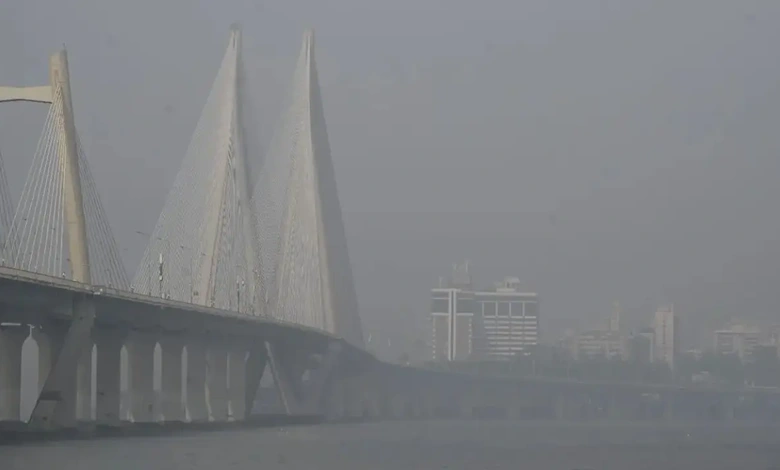
On February 4, 2026, Mumbai residents faced yet another day dominated by poor visibility and concerning pollution levels, as thick smog blanketed much of the city from early morning onward. The haze, captured in visuals circulated by news agency ANI, particularly affected areas like Wadala, where commuters navigated through reduced sightlines.
Data from AQI.in showed the city’s overall Air Quality Index holding steady at 280 on Wednesday—categorized as ‘Unhealthy’—barely shifting from Tuesday’s 281. Pollution dipped to a 24-hour low of 200 (still ‘Poor’) around 7 pm the previous evening, but overall readings offered little relief. Health experts note that sustained exposure at these levels can trigger respiratory irritation, eye discomfort, and elevated risks even among otherwise healthy individuals.
The Indian Meteorological Department (IMD) predicted partly cloudy conditions with persistent haze throughout the day. Daytime temperatures were forecast to range between 21°C and 34°C, reflecting Mumbai’s ongoing move toward warmer summer weather patterns.
Pollution remained most acute in eastern and industrial zones. Sewri West topped the list with an AQI of 368, approaching the ‘Severe’ threshold near 400. Nearby hotspots included Shell Colony at 359, Cama Industrial Estate at 356, Yagna Nagar at 354, and Wadala Truck Terminal at 342, underscoring elevated concentrations of pollutants in traffic-congested and manufacturing areas.
A handful of locations recorded comparatively lower—though still problematic—levels in the ‘Poor’ range. Shiv Sagar Estate registered the best reading at 103, followed by Sarvodaya Nagar Station 1 (110), Ambivali (113), Maratha Colony (113), and Dhakoji Sethpada (120).
ALSO READ : Mumbai Local News : 325 New ATVMs To Be Installed On Western Railway To avoid Long Queues
Standard AQI categories classify 0–50 as ‘Good,’ 51–100 as ‘Moderate,’ 101–200 as ‘Poor,’ 201–300 as ‘Unhealthy,’ and above 300 as ‘Severe’ or ‘Hazardous.’ With several neighborhoods lingering close to or within severe territory, the figures highlight the stubborn nature of Mumbai’s air pollution challenges amid seasonal shifts and urban activity.
-

-
-
-