
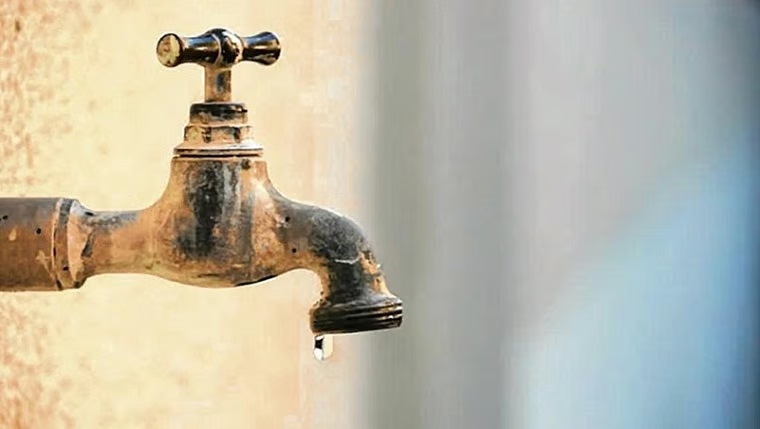
Mumbai is facing a tightening water supply situation as reservoir levels continue to drop amid a delayed southwest monsoon. With stocks sufficient for only about 40 days of consumption, civic authorities are preparing to reassess their distribution approach to manage the challenging conditions ahead.
The seven major lakes that serve as the primary sources for the city’s drinking water currently stand at just 10.72 percent of their combined capacity, which totals approximately 1,447,363 million litres. To safeguard these dwindling resources, a 10 percent reduction in water supply has been implemented and remains in effect.
This year’s rainfall in the catchment areas has been minimal. The regions feeding Tansa and Modak Sagar lakes have recorded 13 mm and 7 mm respectively, while the other lakes have seen no precipitation at all. These low inflows have accelerated the depletion of stored water. Nevertheless, current reserves are higher than at the same time last year, when levels were at 5.45 percent, equivalent to 78,889 million litres. This year’s stock represents an improvement, standing at 8.69 percent or about 125,824 million litres more than the previous corresponding period.
Authorities plan to convene shortly to formulate a detailed strategy for navigating the extended dry spell. The focus is on optimizing available supplies while the city awaits the arrival of significant monsoon rains. The situation underscores the vulnerability of urban water systems to shifts in seasonal weather patterns, particularly when early rainfall is scarce.


ALSO READ : Mumbai Weather Update: IMD Predicts Rain And Thunderstorms As Temperature Stays Above 31°C
As the monsoon has yet to make its full impact, conservation measures are crucial to stretch existing resources. Residents are encouraged to use water judiciously, though specific additional restrictions beyond the current cut have not been detailed at this stage. The civic body continues to monitor lake levels closely and will adjust its response based on incoming weather developments.
This scenario highlights the importance of proactive planning in water management for a major metropolis like Mumbai, where millions depend on these reservoirs for daily needs. With the onset of the monsoon still pending, sustained vigilance and efficient usage will be key to avoiding more severe shortages in the coming weeks.