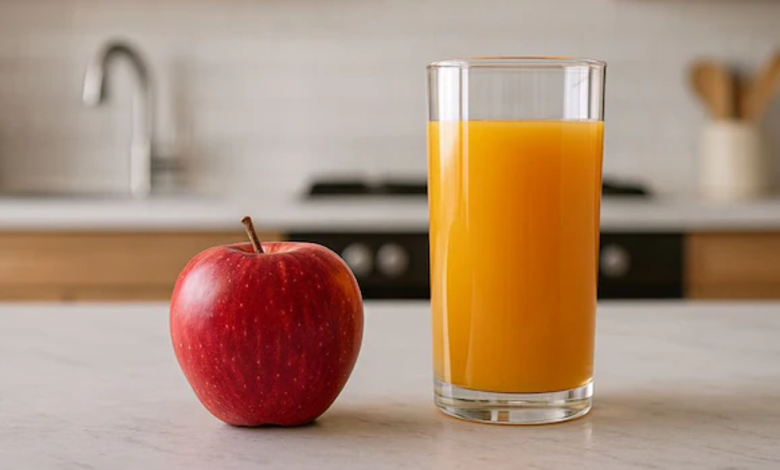
For individuals living with diabetes, choosing between whole fruit and fruit juice can significantly impact blood sugar control. Nutrition experts strongly recommend consuming fruits in their whole form rather than as juice, primarily due to the presence of dietary fibre that regulates sugar absorption.
How Whole Fruits Help Stabilise Blood Sugar ?
Whole fruits contain natural sugars along with fibre, water, and beneficial plant compounds. The fibre slows down digestion, preventing sudden spikes in blood glucose levels. Nutrition consultant Rupali Datta explained, “When fruit is eaten whole, the fibre acts as a natural regulator, allowing sugar to be absorbed gradually.” This steady release makes whole fruits a safer and more balanced option when eaten in moderation, ideally paired with meals.
Why Fruit Juice Can Harm Blood Sugar Control ?
In contrast, juicing strips away most of the fibre while concentrating the natural sugars. This leads to rapid digestion and quick rises in blood sugar. Renowned nutritionist Rujuta Diwekar stated clearly, “Fresh juice is not for people dealing with diabetes, PCOD, obesity, heart disease, etc. It can quickly upset blood sugar regulation and deprive them of essential nutrients that would otherwise be available with proper chewing of fresh fruit.” Even 100% pure fruit juice lacks the protective benefits of whole fruit.
Better Satiety and Portion Control with Whole Fruits
Eating whole fruit requires chewing, which promotes a feeling of fullness and helps with portion control. Dietitian Ananya Verma noted, “People feel satisfied after eating a fruit, but juice doesn’t offer the same fullness.” The combination of fibre and water content in whole fruits reduces the risk of overeating calories or carbohydrates.
Limited Role for Juice and Recommended Fruits
Fruit juice may be used occasionally to treat episodes of low blood sugar due to its fast-acting glucose boost, but it is not suitable for regular consumption. Experts advise consulting a doctor before including juice in a diabetes-friendly diet.
Nutritionist and macrobiotic health coach Shilpa Arora ND recommends several fruits with low glycaemic index and high fibre or antioxidant content for better diabetes management. These include pomegranates, grapes, apples (especially with skin), blueberries, strawberries, guava, watermelon, cherries, papaya, and oranges.
In summary, health professionals agree that diabetics should prefer whole fruits over juice to maintain stable insulin levels and overall metabolic health. Moderate portions of the right fruits can be a valuable part of a balanced diet.
-

-

-

-