Gudi Padwa, the traditional New Year for Marathi and Konkani Hindu communities, embodies cultural renewal, spiritual awakening, and the arrival of spring. Falling on the first day of the Chaitra month in the Hindu lunisolar calendar, the festival typically occurs in March or April and carries profound significance as a time of fresh beginnings, prosperity, and seasonal joy.
In 2026, Gudi Padwa will be observed on March 19, coinciding with Ugadi celebrations in other parts of India. The date aligns with the Pratipada tithi of the bright half of Chaitra and marks the harvest of rabi crops, blending agricultural gratitude with religious fervor. Across Maharashtra, families will raise colorful Gudi flags atop homes, symbolizing victory and good fortune.
The origins of Gudi Padwa trace back to ancient mythology and history. According to legend, Lord Brahma created the universe on this day, setting the cycle of time in motion. It also commemorates Lord Rama’s triumphant return to Ayodhya after defeating Ravana, with the Gudi serving as a symbolic victory banner. Historical accounts link the festival to Chhatrapati Shivaji Maharaj, who is said to have hoisted a Gudi following his coronation, reinforcing ideals of sovereignty and success.
At its core, the festival highlights the triumph of good over evil and the acceptance of life’s contrasting experiences—sweetness represented by jaggery or sugar crystals and bitterness by neem leaves. Devotees offer prayers to Lord Vishnu, Brahma, and Lakshmi, seeking abundance and blessings for the year ahead.
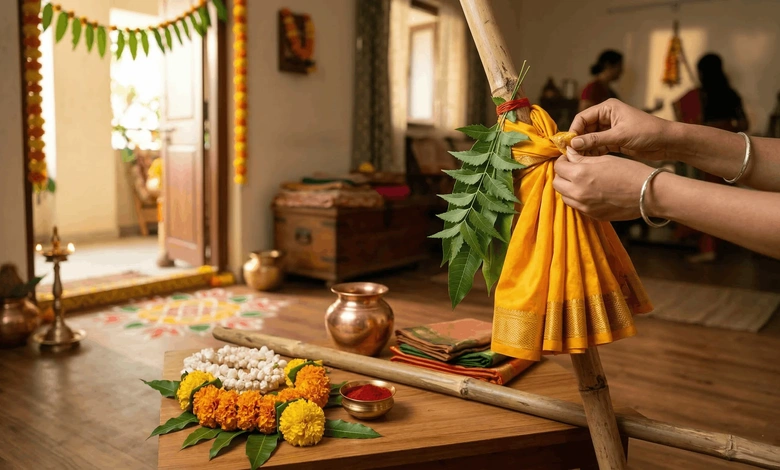
The Gudi itself forms the festival’s most distinctive symbol: a tall bamboo pole, typically four to five feet high, adorned with bright silk fabric in shades of yellow, red, or green. It is decorated with mango and neem leaves, flowers, strings of sugar crystals, and crowned with an inverted silver or copper kalash. Homes are cleaned, entrances adorned with intricate rangoli patterns, and family members take purifying oil baths in the morning.
Rituals begin early with the application of ubtan—a paste of turmeric, sandalwood, and milk—followed by a special puja. The Gudi is ceremoniously hoisted on the right side of the main entrance or balcony amid drumming and cheers. Families perform aarti, recite mantras, offer havan, and distribute prasad after consuming the traditional neem-jaggery mixture, which reminds participants to embrace both joys and challenges.
ALSO READ : Ugadi 2026: Date, Significance and Timings
Festive tables overflow with Maharashtrian delicacies such as puran poli (sweet lentil-stuffed flatbread), shrikhand, aamras, puris, sabudana khichdi, and sweets like modak and karanji. These dishes celebrate seasonal ingredients and foster communal bonding.
Primarily observed in Maharashtra, Goa, and parts of Karnataka, Gudi Padwa shares its date with Ugadi in Andhra Pradesh, Telangana, and Karnataka, though regional foods and customs differ slightly. In cities like Mumbai, Pune, and Kolhapur, the day features street processions, Lavani folk dances, rangoli competitions, and cultural programs. Modern observances incorporate eco-friendly practices, traditional nauvarisarees for women and dhotis for men, and auspicious starts to new ventures or stock market activities.
The festival strengthens family ties, encourages gratitude for the harvest, and inspires resolutions for a prosperous year. It continues to blend ancient wisdom with contemporary life, inviting both locals and visitors to immerse themselves in its rich heritage through temple visits, parades, and community events.
-

-
-

-