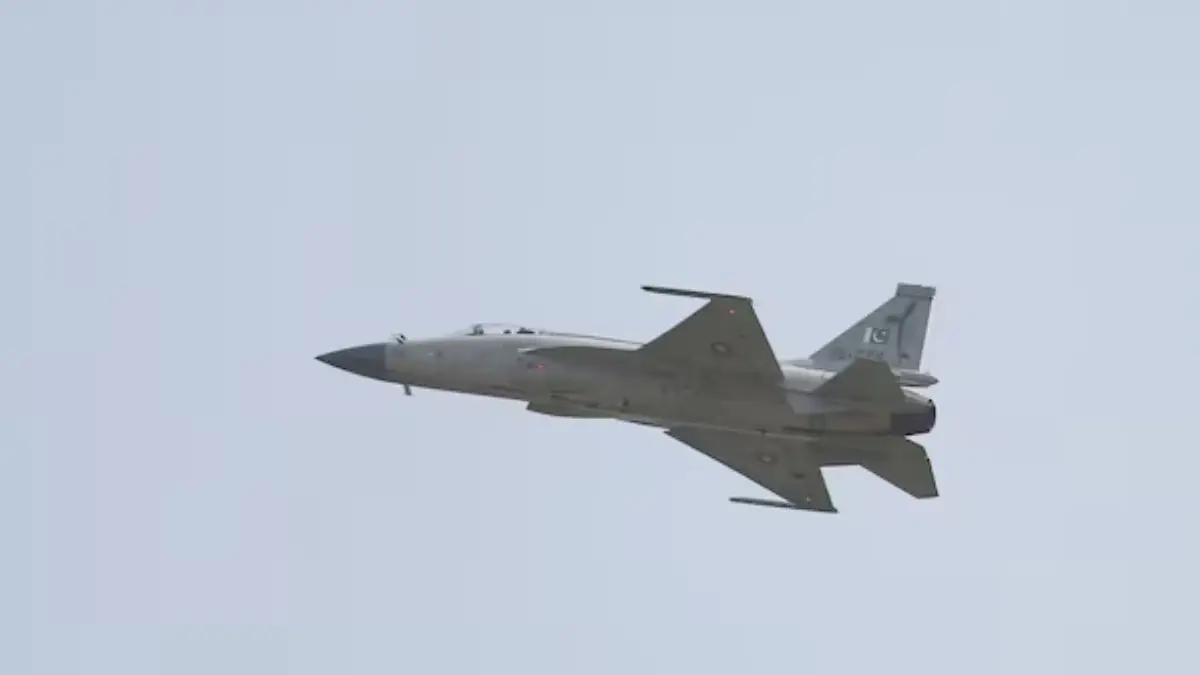
Karachi : Pakistan seems to be finally winning an air battle, but only in social media narratives and not in the skies. Islamabad is pushing the narrative that its supposedly ‘indigenous’ fighter jet, the JF-17 Thunder, is in soaring demand globally. But scratch the surface and that narrative looks incredibly superficial. The most preposterous of all the claims is a ‘jets-for-loans deal’ with the Saudis.
The Royal Saudi Air Force already has one of the most sophisticated air forces equipped with advanced fighters like the American F-15 and Eurofighter Typhoon. The Saudis are in the process of ordering at least 48 F-35 stealth fighters from the US. But apparently the JF-17 is such an amazing fighter that the kingdom might convert USD 2 billion in loans into a JF-17 deal for Pakistan.
By now it is clear that Asim Munir’s government is using the chatter around JF-17 jets to bolster its frivolous claims of a victory in Operation Sindoor and to project Pakistan as an emerging defence manufacturing power, despite scant evidence on the ground. It is worth noting that only the Chinese-origin J-10C fighters were mainly involved in aerial combat during day 1 of Operation Sindoor and not the JF-17s. But still the aircraft is now being retroactively projected as a battle-proven export success.
The reality of JF-17 exports tells a very different story. The two foreign customers of JF-17s, Myanmar & Nigeria, have both encountered several problems with operating the snag-prone fighter jet. Substandard avionics, structural flaws and spare parts availability have severely grounded Myanmar’s JF-17s. Pakistan lacks the industrial base to back up its rhetoric.
Read Also : Chile Wildfires Kill 18, Torch Thousands Ff Homes As State of Catastrophe Declared