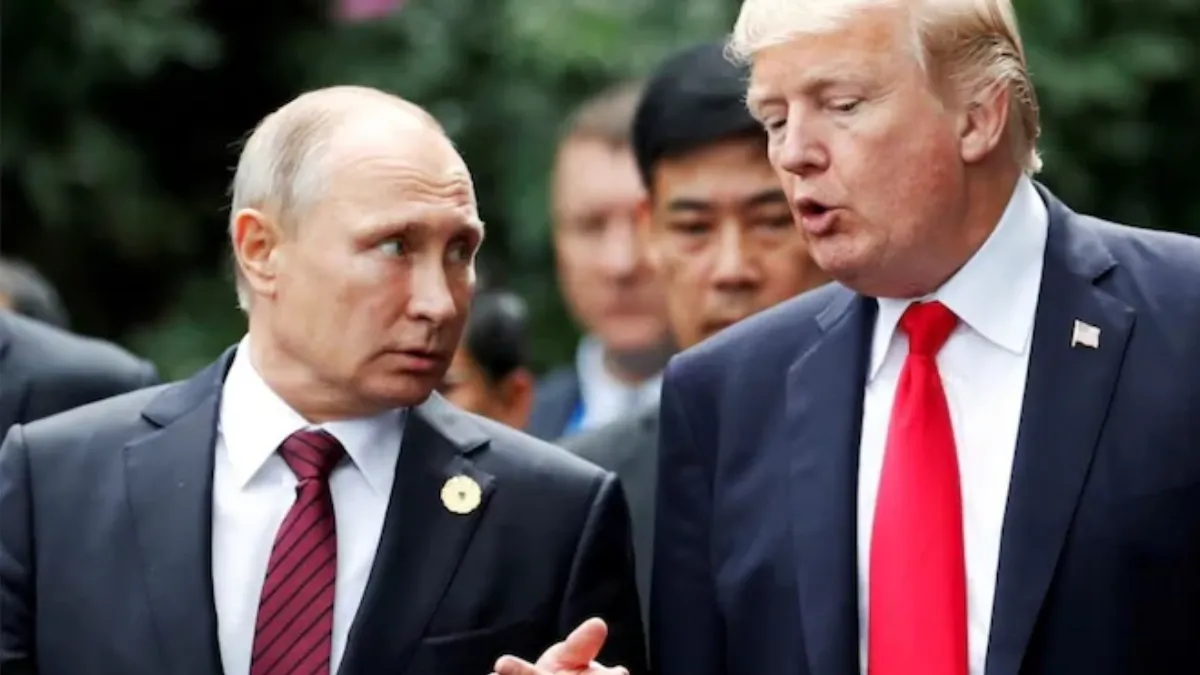
U.S. President Donald Trump has advocated for negotiating a new nuclear arms control treaty following the expiration of the New START agreement with Russia, amid widespread concerns over the potential onset of an unconstrained global arms race.
The New START treaty, originally signed in 2010 under President Barack Obama and later extended by President Joe Biden, imposed verifiable limits on the strategic nuclear arsenals of the world’s two largest nuclear powers. It capped each side at 1,550 deployed warheads and expired on February 5, 2026, marking the end of more than half a century of bilateral arms control frameworks dating back to the Cold War era.
Shortly after the pact lapsed, Trump criticized the agreement on his Truth Social platform as “badly negotiated” and accused it of being “grossly violated.” He stated: “Rather than extend ‘NEW START’ … we should have our Nuclear Experts work on a new, improved, and modernized Treaty that can last long into the future.”
The Trump administration has consistently sought to bring China into any future accord, citing Beijing’s rapidly expanding nuclear arsenal. However, China has firmly rejected such inclusion, with its Foreign Ministry spokesperson Lin Jian noting on February 5, 2026, that China’s nuclear capabilities remain on a “totally different scale” compared to those of the United States and Russia. Beijing expressed regret over New START’s end but declined to join disarmament talks at this stage.
ALSO READ : No Bullying On Trade, Ready To Wait Out Trump’s Term, Doval Conveyed To Rubio
Russia, which suspended inspections under the treaty amid strained ties with the previous U.S. administration, announced on February 4, 2026, that it no longer considered itself bound by the warhead limits post-expiration. When asked if both nations had agreed to informally observe the old caps during new negotiations, White House spokesperson Karoline Leavitt replied: “Not to my knowledge.”
The development has drawn sharp warnings from experts and international figures. A joint statement from former senior arms control officials on February 5, 2026, urged Washington and Moscow to continue adhering to New START limits as an initial measure, warning that the treaty’s demise would erode nuclear stability, heighten unpredictability, and elevate risks of unconstrained competition.
U.N. Secretary-General Antonio Guterres described the moment as a “grave” one for global security, stating that the dissolution of decades-long achievements comes at a perilous time when the risk of nuclear weapon use is at its highest in decades—exacerbated by Russia’s earlier rhetoric on tactical nuclear options in the Ukraine conflict.
A NATO official, speaking anonymously, called for restraint and responsibility while condemning Russia’s “irresponsible nuclear rhetoric,” and affirmed the alliance’s commitment to necessary defensive steps.
Arms control advocates, including Daryl Kimball of the Arms Control Association, noted that while China’s engagement is desirable given its arsenal growth—estimated by the Stockholm International Peace Research Institute at about 100 new warheads annually since 2023, reaching at least 600—there has been no visible outreach from the Trump team to Beijing on risk reduction or talks since resuming office in 2025.
The United States and Russia together hold over 80 percent of global nuclear warheads, with the U.S., Russia, and allies like France and Britain maintaining far larger stockpiles than China. The article was reported from Washington and sourced from AFP.