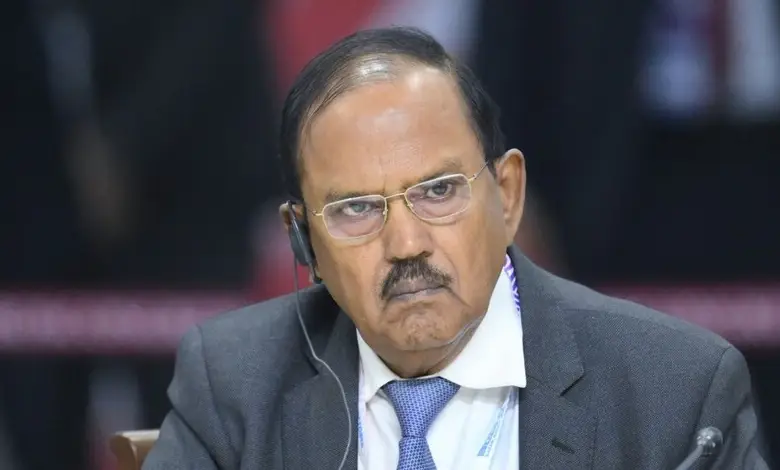
New Delhi has demonstrated a resolute approach in its trade negotiations with the United States, making it clear that it would not succumb to pressure from President Donald Trump or his administration. According to a report by Bloomberg, India’s National Security Adviser Ajit Doval conveyed this position during a meeting with US Secretary of State Marco Rubio in September 2025.
In the discussions, Doval emphasized that India would not be bullied by Trump or his senior aides into accepting unfavorable terms on a bilateral trade agreement. He further informed Rubio that the Narendra Modi government was prepared to wait out the duration of Trump’s presidential term if necessary to secure a deal that aligned with New Delhi’s interests. Doval referenced India’s past experiences dealing with other challenging US administrations to underscore this readiness for patience.
The message also included a request for Trump and his team to moderate their public criticisms of India, which had strained relations amid escalating tariff disputes. This behind-the-scenes diplomacy aimed to pave the way for renewed constructive engagement and progress on trade talks.
The context of these exchanges has shifted with recent developments. President Trump announced on Monday via a post on Truth Social that he had spoken with Prime Minister Narendra Modi, describing him as a close friend and respected leader. Trump highlighted discussions on trade, the Russia-Ukraine conflict, and energy matters, stating that Modi agreed to cease purchases of Russian oil and increase imports from the United States and potentially Venezuela.
ALSO READ : Putin To Visit India Later This year, Ajit Doval Calls Past India-Russia Summits ‘Watershed Moments’
This followed the conclusion of a trade deal that reduced US tariffs on Indian goods from 50% to 18%. Union Commerce Minister Piyush Goyal described the agreement as a significant achievement finalized under Modi’s leadership, one that safeguards India’s sensitive sectors, particularly agriculture and dairy. Goyal expressed widespread domestic enthusiasm for the pact, noting that it protects national interests while opening opportunities for growth. He indicated that a joint statement from both countries, along with full details, would be issued soon after technical processes are completed.
Negotiations for the deal began in March 2025, involving multiple rounds and delegations, though they faced setbacks from heightened import duties imposed by the US. The agreement sets an ambitious target to more than double bilateral trade to $500 billion by 2030.
-
-

-
-