As the US-Israel conflict with Iran entered its second month, Iranian officials have accused Washington of preparing a ground invasion in private while signalling openness to negotiations in public, even as the war continues to claim lives and severely disrupt global energy markets.
In a statement marking 30 days since the fighting erupted on February 28, Iranian Parliament Speaker Mohammad Bagher Ghalibaf declared that the adversary was sending mixed messages. “The enemy signals negotiation in public, while in secret it plots a ground attack,” he said. Ghalibaf added that Iranian forces remained resolute, with missiles ready and determination strengthened. He warned that any American troops arriving on the ground would face fierce retaliation, vowing to “set them on fire” and punish regional partners.
The conflict has already resulted in thousands of deaths and the largest disruption to global energy supplies in history. Recent escalations include Yemen’s Iran-backed Houthis firing missiles at Israel for the first time since the war began, with tracers reportedly sighted over the West Bank town of Hebron. Meanwhile, Israeli Prime Minister Benjamin Netanyahu announced an expansion of Israel’s operations in southern Lebanon to neutralize threats from Iranian-backed Hezbollah, including anti-tank missile attacks near the border.
A funeral was held for three journalists killed in an Israeli strike in Lebanon, bringing the death toll in that country to over 1,100 since the conflict started. Separately, a UN peacekeeping mission (Unifil) peacekeeper was killed and another seriously injured when a projectile struck their position in southern Lebanon; the source remains under investigation.
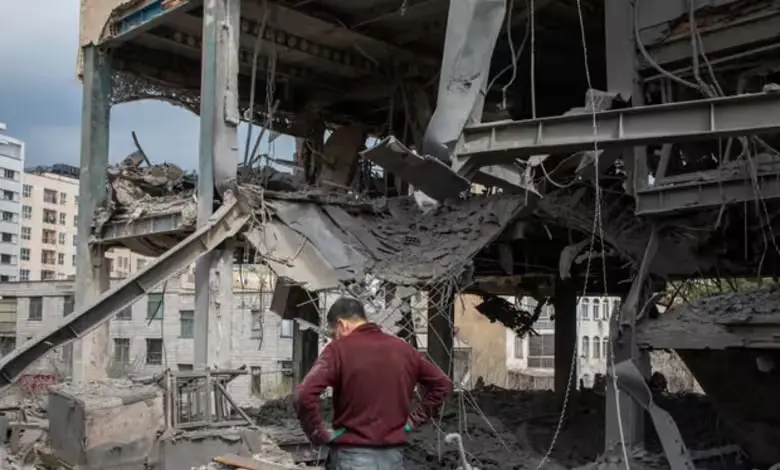
On the Iranian side, an Iranian missile triggered a fire at Israel’s Neot Hovav industrial zone near Beersheba, lightly injuring six people and raising concerns over possible hazardous material leaks at a chemical plant. Israeli strikes have targeted weapons facilities in Tehran and other sites, including a pier in Bandar-e-Khamir where five people died and two vessels were destroyed. A building housing Qatar’s Al Araby TV was also hit, causing power outages in parts of the capital.
ALSO READ : Pakistan Poised To Broker US-Iran Dialogue As Regional Tensions Soar
Reports indicate the Pentagon is preparing for potential ground operations in Iran, involving special forces raids and possibly conventional troops, though not a full-scale invasion. Options under consideration include seizing Kharg Island, Iran’s key oil export terminal, and targeting coastal sites near the Strait of Hormuz. US officials have told the Washington Post about these preparations, while the Wall Street Journal and Axios have reported on discussions for deploying an additional 10,000 troops alongside intensified bombing. The White House has offered mixed signals, with Press Secretary Karoline Leavitt describing the planning as giving President Donald Trump “maximum optionality.”
Iran has rejected a US-proposed 15-point ceasefire that included reopening the Strait of Hormuz and nuclear restrictions, instead offering its own alternatives. Tehran reportedly passed a response via Pakistan, according to an anonymous source cited by Iranian Tasnim news agency. Pakistani Foreign Minister Ishaq Dar expressed optimism about upcoming US-Iran talks facilitated by Islamabad, following a four-nation meeting in Pakistan involving Saudi Arabia, Turkey and Egypt.
Diplomatic efforts continue even as risks mount. Houthis could threaten shipping in the Bab el-Mandeb strait, which handles 12 percent of global oil trade, potentially drawing Saudi Arabia deeper into the conflict if its alternative export routes are affected. Farea Al-Muslimi of Chatham House described the Houthi involvement as a serious escalation with major implications for maritime routes and regional infrastructure.
The war shows little sign of abating despite these parallel tracks of military planning and diplomatic outreach.
-

-

-
-