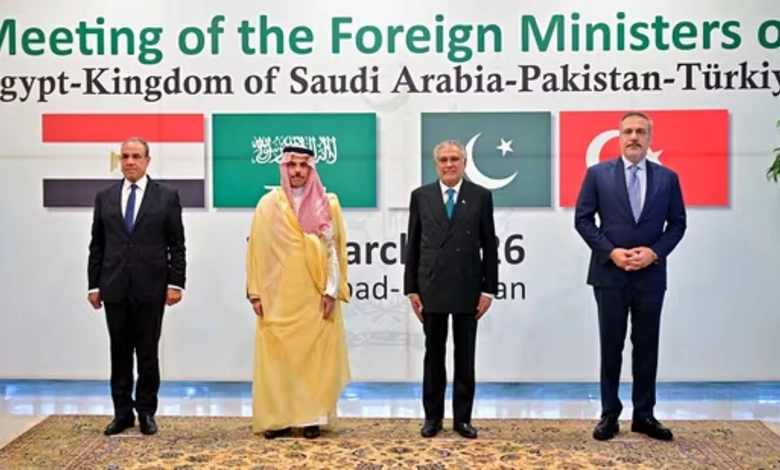
Islamabad has announced that both the United States and Iran have voiced confidence in Pakistan’s role as a mediator, with diplomatic talks anticipated in the coming days amid escalating conflict in the Middle East.
Foreign Minister Ishaq Dar stated on Sunday that Pakistan is “very happy” both Washington and Tehran have expressed trust in Islamabad’s facilitation efforts. He made the remarks in a televised address, as reported by news agency AP, adding that discussions are likely to occur soon, though it is not yet clear if they will be direct or indirect.
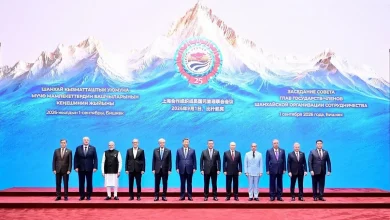
The development follows a meeting in Islamabad on March 29 involving foreign ministers from Pakistan, Saudi Arabia, Egypt, and Turkey. The gathering focused on the ongoing war in the Middle East, now in its fifth week, and its broader impact on the global economy. Dar told reporters, as quoted by news agency PTI, that the participants agreed the conflict benefits no one and would only result in further death and destruction. He stressed the importance of unity within the Muslim ummah during these difficult times.
The visiting ministers were briefed on the prospects of US-Iran talks hosted in Islamabad and extended their full support to the initiative, Dar said. Another round of discussions among the foreign ministers is scheduled for Monday.
ALSO READ : Iran Warns US Troops Will Be ‘Shark Food’ in Persian Gulf if Ground Invasion of Iran Is Attempted
Pakistani officials indicated that backchannel diplomacy has been underway for several weeks before the efforts were made public. Dar noted that Pakistan has actively engaged with US leadership to help de-escalate tensions and seek a resolution to the conflict. The foreign ministers collectively called for creating conditions conducive to structured negotiations, emphasising dialogue as the only viable path to peace.
No immediate comments were available from either the United States or Iran regarding the proposed talks.
Despite Islamabad’s push, signs of scepticism have emerged from Tehran. Iran’s parliament speaker, Mohammad Bagher Qalibaf, dismissed the idea of negotiations, linking them to recent US military deployments in the region. According to Iranian state media, he said Iranian forces were prepared to confront American troops if they arrived on the ground.
The comments came after reports that around 2,500 US Marines had been sent to the Middle East for amphibious operations, adding to regional tensions.
In Israel, Prime Minister Benjamin Netanyahu signalled a possible widening of military operations in southern Lebanon. He indicated that the army would extend the existing security strip to counter the Iran-backed Hezbollah group, without providing specific operational details.
Pakistan’s mediation attempt unfolds against a backdrop of stalled direct US-Iran talks and growing international economic concerns. A reported 15-point ceasefire proposal conveyed by Washington to Tehran via Pakistan was reportedly rejected by Iran. A key point of contention remains the status of the Strait of Hormuz, a vital chokepoint for global oil and gas shipments.
Disruptions in the strait have pushed up crude prices and caused gas shortages in parts of Asia, with tanker movements severely restricted for nations including China, India, and Pakistan.