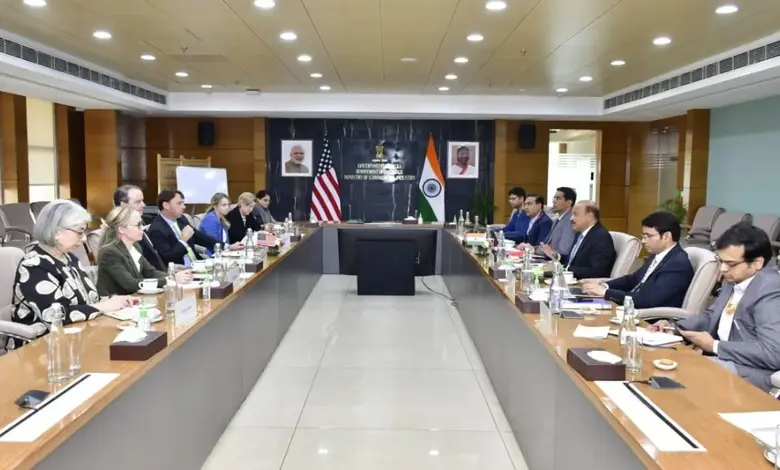
New Delhi – Officials from India and the United States wrapped up a two-day series of discussions in the capital on Thursday, delving into pivotal aspects of bilateral commerce and pledging sustained, constructive dialogue, according to sources cited by news agency PTI.
The meetings underscored a mutual resolve to advance ongoing efforts toward a balanced trade deal, with participants committing to maintain the momentum of these fruitful interactions, the commerce ministry sources indicated.
Heading the American side was Deputy US Trade Representative Rick Switzer, whose trip marked his inaugural visit to India since taking up the role. Switzer engaged with Commerce and Industries Minister Piyush Goyal, Commerce Secretary Rajesh Agrawal, and several high-ranking Indian counterparts. These sessions provided a platform for in-depth discussions spanning various facets of the India-US economic relationship, particularly the active talks for an equitable bilateral trade accord.
ALSO READ : PM Modi Holds Talks with Trump, Stresses Boosting Trade Amid Rising Tariff Tensions
The timing of Switzer’s visit aligns with heightened urgency in sealing the initial phase of this agreement. Back in February, the nations’ leaders instructed their teams to pursue such a pact, targeting completion of its first segment by autumn 2025. To date, negotiators have completed six rounds of deliberations. The overarching goal is to elevate two-way trade beyond $500 billion by 2030, up from the existing $191 billion.
For the fourth consecutive year through 2024–25, the US has held the position of India’s top trading partner, with total exchanges reaching $131.84 billion, encompassing $86.5 billion in exports from India.
In a parallel development, Prime Minister Narendra Modi conducted a phone call with US President Donald Trump on Thursday, assessing advancements in the India-US Comprehensive Global Strategic Partnership. An official statement noted the leaders’ mutual contentment with the steady enhancement of ties and their renewed dedication to expanding collaboration in vital areas. The discussion emphasized the importance of accelerating initiatives to amplify trade volumes, positioning commercial growth as a cornerstone of the partnership’s economic framework.
-

-

-

-