
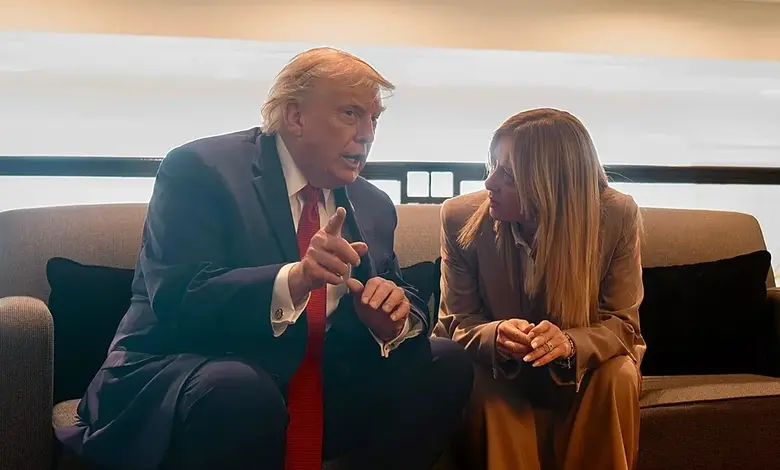
Tensions between US President Donald Trump and Italian Prime Minister Giorgia Meloni have intensified following a public exchange of criticisms centered on a photograph taken during the recent G7 Summit in France.
In a message posted on X, Trump asserted that Meloni repeatedly asked him for a picture at the summit. He suggested her actions stemmed from declining popularity in Italy and linked it to policy differences, particularly regarding Iran. Trump claimed Meloni had turned down the United States an ally that provides significant protection to Italy by opposing efforts to prevent Iran from developing nuclear weapons, a stance he noted was shared by NATO.
He further accused her of supporting Iran over the United States in related conflicts and refusing to allow American forces access to Italian landing strips and runways, describing this as a major logistical challenge. Despite the substantial financial contributions the US makes annually to support Italy and other NATO partners, Trump said Meloni appeared eager to build a closer relationship to boost her domestic standing.
Meloni responded firmly, rejecting Trump’s account as entirely fabricated and expressing astonishment at his remarks. In a statement shared on Instagram, she emphasized that her popularity was unrelated to any friendship with Trump and depended instead on her commitment to defending Italy’s national interests. She advised him to focus on his own popularity rather than commenting on hers, adding that such unprovoked attacks were senseless.



Earlier, Meloni had publicly dismissed the claims in a post on X, stating, “I and Italy never beg.” She described Trump’s comments as insulting toward allies and questioned why he directed such criticism at partners while showing more accommodation toward adversaries of the West and the United States.
During an interview, Trump had recounted the interaction, saying Meloni wanted the photograph “so badly” that he agreed out of sympathy, even though he felt he did not need to engage with her. He portrayed her as grateful for the conversation.
The exchange highlights ongoing friction between the two leaders despite their shared political alignments, underscoring differences in how they perceive bilateral relations and international alliances. The dispute remains centered on the authenticity of the photo request and broader questions of loyalty within international partnerships.