
Pakistan on Tuesday hosted an international conference in Islamabad warning that global treaty frameworks established after the Second World War would be jeopardised if the Indus Waters Treaty (IWT) were allowed to collapse. The seminar comes more than a year after India placed the 1960 water-sharing agreement in abeyance following the Pahalgam terror attack in Jammu and Kashmir in April 2025, in which 26 civilians were killed.
Pakistan’s agrarian economy and power generation depend heavily on the waters of the Indus River system, and the suspension has left Islamabad without the hydrological data it previously received from India for timely flood and drought planning.
Addressing the seminar, Deputy Prime Minister and Foreign Minister Ishaq Dar described the IWT as “not merely a water-sharing arrangement but a vital instrument of regional peace, stability, and cooperation.” In a post on social media platform X, Dar added that “shared waters must never be weaponised. They must remain a bridge between nations, guided by cooperation, dialogue, and respect for international law.” He further warned that any attempt to deprive Pakistan of its rights under the treaty would carry serious consequences for regional peace and security, affecting nearly two billion people across South Asia.
It was a privilege to address the seminar, “Indus Waters Treaty: An Instrument of Regional Peace and Stability,” where leading experts from Pakistan and abroad discussed one of the defining challenges of our time in South Asia.
I underscored that the Indus Waters Treaty is not…— Ishaq Dar (@MIshaqDar50) June 30, 2026





Climate Change Minister Musadik Malik told the gathering that the treaty was one of the strongest international agreements ever negotiated, arguing that international law is properly tested at its weakest point rather than its strongest. Without directly naming India, Malik questioned what value international treaties retain if a powerful country can unilaterally suspend them, and likened such unilateral conduct to historical patterns that have preceded humanitarian catastrophes.
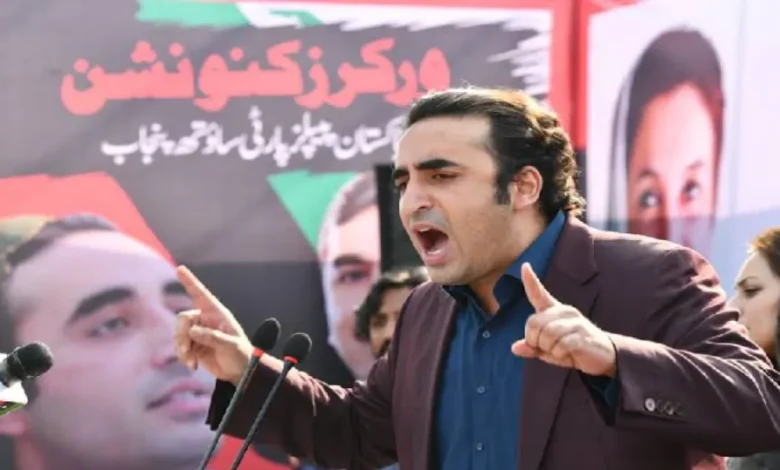
PPP chief and MP Bilawal Bhutto Zardari, also addressing the seminar, said any move to block, divert or control Pakistan’s water would not be treated as routine engineering, and that the Indus River could not be turned into a weapon. He said Pakistan remained open to dialogue, but only on the basis of international law.
Pakistan’s Indus Waters Commissioner, Mehr Ali Shah, told the seminar the treaty functioned as a conflict-prevention mechanism rather than a simple water-sharing arrangement, noting that more than 80 per cent of Pakistan’s arable land depends on the Indus basin, with agriculture accounting for roughly a quarter of the country’s GDP and a third of its employment.
Information Minister Attaullah Tarar, who opened the seminar, called it the first conference of its kind on the treaty and said the international community had increasingly recognised Pakistan’s legal position.
why the treaty is in abeyance
The Indus Waters Treaty was signed on 19 September 1960 in Karachi, brokered by the World Bank, between India’s first prime minister Jawaharlal Nehru and Pakistani president Ayub Khan. It allocates the six rivers of the Indus basin between the two countries and has historically survived multiple wars and periods of strained bilateral relations.
Following the April 2025 Pahalgam attack, India announced it was placing the treaty in abeyance, stating that water cooperation could not remain insulated from cross-border terrorism and linking future cooperation to credible, irreversible Pakistani action against terrorism originating from its territory. Prime Minister Narendra Modi said at the time that “blood and water cannot flow together.”
Since the suspension, India has accelerated work on hydropower and water infrastructure on the western rivers and indicated it will maximise its use of available water resources, reducing flows that would otherwise reach Pakistan wherever legally and technically feasible. India has maintained that the treaty will stay in abeyance until Pakistan credibly ends support for cross-border terrorism.