
Nepal Flood Crisis: Survivors Wait Upto 48 Hours As Helicopters Race To Reach Stranded People
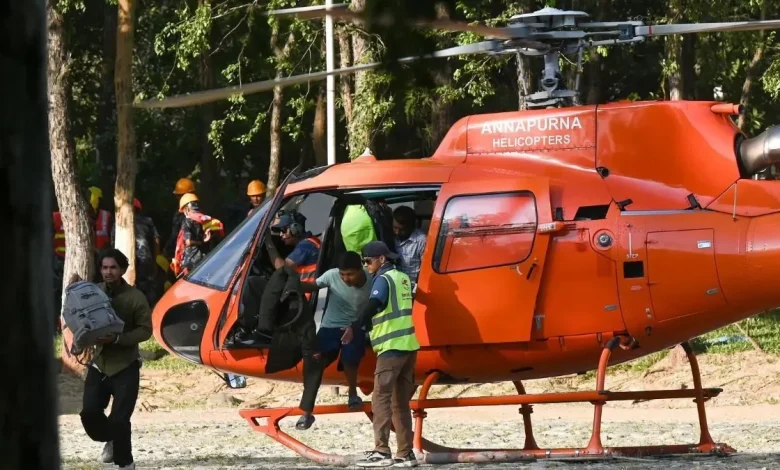
Kathmandu: Nepal’s rescue operation is facing a major challenge as hundreds of people stranded in remote Himalayan areas wait for helicopter evacuations, with some reportedly spending up to 48 hours at rescue points.
At Dhunche in Rasuwa district, people rescued from areas cut off by the floods have been gathering at the Army helipad, hoping for a place on the next available flight. With roads and bridges destroyed, helicopters have become one of the few ways to move people out of the worst hit areas.
The crisis began on August 26, when a massive collapse of ice and rock near the Nepal-China border triggered devastating flash floods. The rushing water carried huge amounts of mud, rocks and debris through valleys, destroying homes, roads, bridges and hydropower facilities.
The disaster has now claimed more than 1,100 lives in Nepal, while thousands of people remain missing. The latest reports said at least 1,114 people had died and nearly 4,000 were still unaccounted for. Rescue teams have already brought more than 11,000 people to safety, but the search continues in several difficult locations.



Some of the most difficult searches are taking place at hydropower projects, where workers may still be trapped inside tunnels. Rescue teams from Nepal, India, China and the United States are involved in efforts to reach these areas. Reports said 279 people have been rescued from the affected hydropower sites, while 639 remain unaccounted for.
The disaster has also caused major damage across the border in Tibet. Chinese authorities have reported 16 deaths and 546 people missing.
For families of those still missing, the wait has become increasingly painful. Rescue workers are dealing with unstable terrain, damaged infrastructure and enormous quantities of debris. An estimated 2.2 million tonnes of debris were left behind by the floods, making the search and rebuilding efforts even harder.
The immediate focus remains on finding survivors and getting stranded people to safety. But with a week having passed since the floods, the chances of finding people alive are becoming slimmer.
For those waiting at helipads such as Dhunche, however, the rescue effort is still a matter of survival. Every helicopter that arrives brings another chance for someone to leave the disaster zone and return to safety.
ALSO READ: Indian Tunnel Rescue Team Makes Progress at Chilime, Langtang Hydropower Sites in Nepal