
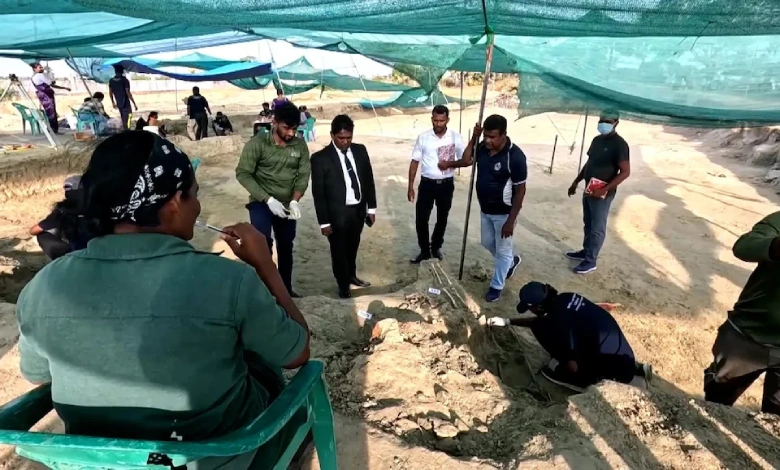
582 human skeletons, including those of newborns and small children, have been found by forensic teams excavating a large grave site in Sri Lanka. Since the end of Sri Lanka’s 26-year civil war, the excavation represents one of the biggest mass graves in the nation.
At Chemmani, close to the northern city of Jaffna, excavators have recovered a number of personal belongings, according to a report in The Telegraph. Plastic milk bottles, kid’s toys, tiny school bags, shoes, and bangles are some of the things that were discovered.
Several skeletons had clear evidence of execution, according to forensic experts on the scene; one skeleton was found with both hands firmly bound against the chest.
Whether any of the 582 individuals whose remains were found are among those who are officially listed as missing in Sri Lanka is still unknown.


Before any identities can be verified, forensic experts must analyze the remains and match DNA samples with those of living family members.
The largest-ever mass grave investigation in Sri Lanka is now centered on the Chemmani site. It has long been linked to extrajudicial executions and forced disappearances throughout the decades-long military war between the Liberation Tigers of Tamil Eelam (LTTE) and Sri Lankan government security forces.
The LTTE, often called the Tamil Tigers, was founded amid long-standing ethnic tensions and fought for an independent homeland for Tamils in Sri Lanka’s north and east. Allegations of grave violations, including kidnappings, murders, rapes, and other abuses, have been made against both the LTTE and the Sri Lankan military.
Tens of thousands of people, mostly from the ethnic Tamil minority, went missing and an estimated 100,000 people died during the civil war, which started in 1983 and concluded in May 2009.
Calls for an international investigation have been reiterated by human rights organizations and the relatives of those who vanished. They contend that previous inquiries into mass graves in Sri Lanka were unable to identify the victims or prosecute the perpetrators. The government of Sri Lanka has maintained that its own institutions should continue to conduct the Chemmani probe since it is independent. Harshana Nanayakkara, the minister of justice, refuted claims that government agencies had let Tamil families down.
“Everyone finds me appealing.” Instead of evaluating these organizations based on their past performance, evaluate them based on how they operate within our government, he stated.