
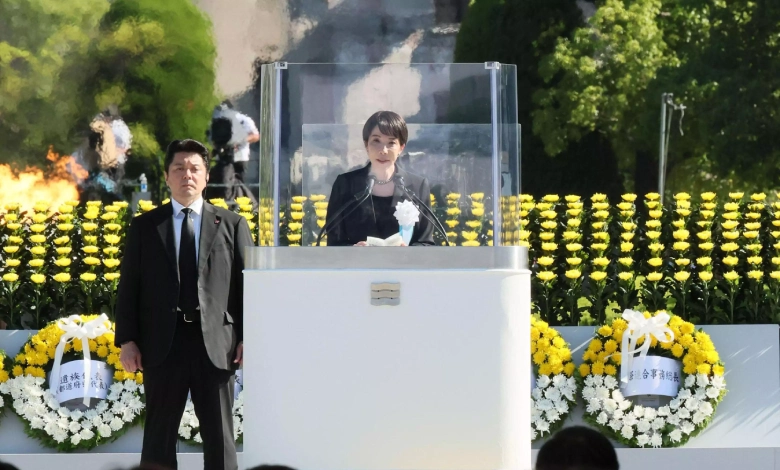
On Thursday, Hiroshima observed the 81st anniversary of the U.S. atomic bombing of the western Japanese city. The mayor of Hiroshima urged major powers to cease defending the use of nuclear weapons as a deterrent and criticized them for starting wars.
Mayor Kazumi Matsui stated, “Downplaying the inhumanity of nuclear weapons and accepting the use of force to pursue one’s own prosperity risk cycles of violent retaliation that could ultimately result in another Hiroshima or Nagasaki.”
Matsui stated in his peace statement at the ceremony at the Hiroshima Peace Memorial Park that too many political figures still view nuclear deterrence as a practical strategy and justify aggression, which “simply pushes a world without nuclear weapons further into the distance.”
Additionally, he urged every individual to take action and learn from the past. The ceremony was expected to draw over 50,000 participants, including delegates from about 120 nations and territories, including Iran and the United States. When a U.S. B-29 dropped the bomb on the city at 8:15 a.m., a minute of silence was observed while a peace bell rang out.




Attending the memorial for the first time as prime minister, Prime Minister Sanae Takaichi declared that, within the parameters of the United Nations convention to prohibit the spread of nuclear weapons, she will adopt “a realistic approach” to attaining a world where nuclear weapons are never deployed.
This year’s event coincides with growing rumors that Japan’s postwar three non-nuclear principles may be relaxed by Takaichi’s hawkish government, which favors nuclear deterrence, as it drafts new security and military policies later this year.
Takaichi has pushed for a reassessment of the principles in order to consider abandoning the third one, which prohibits the importation of nuclear weapons.
Takaichi stated that although Japan has upheld its three non-nuclear postwar commitments, it has not made a commitment to continue doing so in the future. Survivors have voiced their dissatisfaction and concern over the international community’s, including Japan’s, increasing support for nuclear weapons for deterrence.
Under the U.S. nuclear umbrella, Japan has consistently asked Washington for assurances regarding its commitment and more robust protection. As a result, the survivors’ desire to sign the Treaty on the Prohibition of Nuclear Weapons or attend its meetings as observers was denied by Japan’s government.
On August 6, 1945, Hiroshima was bombed by the USA, destroying the city and killing 140,000 people. Three days later, a second bomb was detonated on Nagasaki, killing seventy thousand people. On August 15, Japan submitted, bringing an end to both World War II and its nearly fifty years of aggression in Asia.
With an average age of more than 86, the number of survivors has dropped to 91,105, or around 25% of the initial total. Since the youngest survivor was too young to remember the incident distinctly, survivors are concerned about their memories disappearing.
One lesson from Hiroshima is the terrifying nature of nuclear weapons. The need to create a world where the threat or use of these weapons is unimaginable is another, according to a prepared statement from UN Secretary-General António Guterres.
“Hiroshima is a remarkable illustration of fortitude, rebirth, and optimism. He called for “dialogue over division, cooperation over confrontation, and common security over narrow advantage, reminding us across generations that, even after the darkest moments, we can choose and build a different future.”
Also Read – Dubai Rocked By 7 Blasts In 20 Minutes