
Iran Threatens To Sever Red Sea Internet Cables — Here’s What’s at Stake For India And Global AI
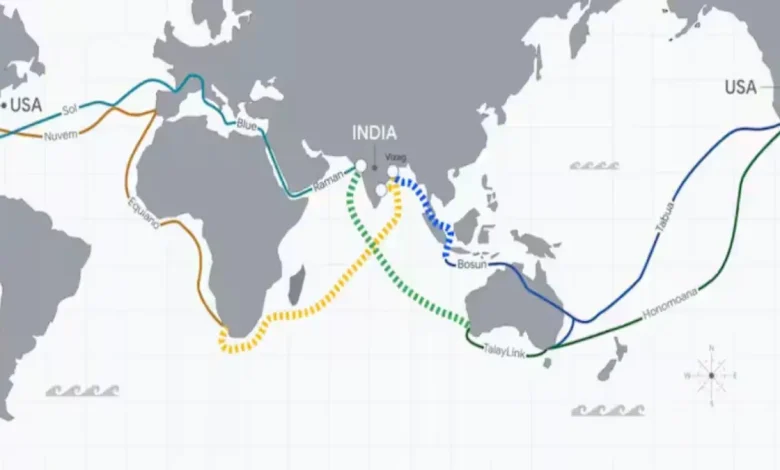
Amid escalating tensions involving the United States, Israel, and Iran, Tehran has reportedly identified a new pressure point beyond the Strait of Hormuz: undersea internet cables running beneath the Red Sea.
The threat has not been confirmed by Iranian officials or intelligence agencies. However, it has gained traction on social media, with Lebanese-Australian entrepreneur Mario Nawfal among those flagging it as a credible possibility. In a post on X, Nawfal wrote that Iran is threatening to cut undersea cables if Gulf states continue hosting US troops, adding that the cables carry 17% of global internet traffic and that Meta’s contractors have already pulled out of the Persian Gulf region.
What Are These Cables?
Thousands of kilometres of fibre optic cables run along the ocean floor beneath the Persian Gulf and Red Sea. They form the backbone of global digital connectivity, handling data exchange across Asia, Africa, and Europe. Their origins trace back to 19th-century telegraph lines that served British imperial networks. By the early 2000s, these corridors were upgraded into high-capacity fibre optic systems such as SEA-ME-WE-4, linking the region to Europe and Asia.
Why This Matters for India
India is acutely exposed. The country’s cloud and artificial intelligence infrastructure increasingly depends on data centres concentrated in the UAE and Saudi Arabia facilities backed by billions of dollars in investment from Amazon, Microsoft, and Google. A disruption to these cables would not merely slow internet speeds. It would stall AI operations, degrade cloud services, and interrupt supply chains that now run on real-time data flows.




Also Read: AWS Data Centres in Bahrain Hit Again As Drone Strikes Cause Outages Across West Asia
Countries across Asia, Africa, and Europe rely on uninterrupted data transit through this corridor. India, still building out its own AI and data centre capacity, remains dependent on Gulf-based infrastructure in the interim.
Why Repair Isn’t Simple
Under normal circumstances, specialised vessels can locate and repair severed cables within weeks. In a conflict scenario, those repair operations become logistically and politically dangerous. A targeted attack could also be difficult to attribute, making accountability and thus deterrence harder to establish. What might ordinarily be a contained outage could, under wartime conditions, extend into months of degraded global connectivity.
The broader concern is structural: the world’s digital economy runs on a relatively small number of physical cables. Their vulnerability, long acknowledged by infrastructure analysts, is now being tested as a geopolitical instrument.