
Iran Has Lost ‘Complete Control’ of Strait of Hormuz, Says US Secretary of State Marco Rubio
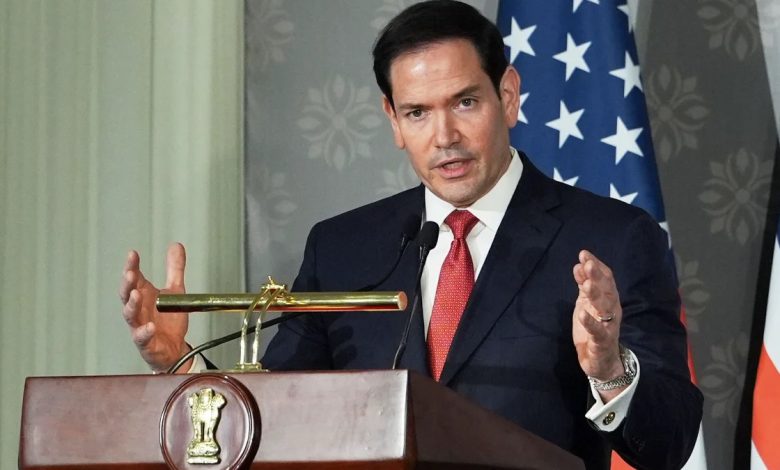
US Secretary of State Marco Rubio said in Greece on Wednesday that Iran has “lost complete control” of the Strait of Hormuz and that pre-war oil transit volumes have been restored.
“The Strait of Hormuz is open and the quantities of oil exiting through it now are exactly the same as the quantities that were exiting before its closure,” Rubio said at a news conference in Athens alongside Greek Foreign Minister George Gerapetritis.
Rubio also said Iran has failed to take advantage of the “multiple opportunities” it had to reach an agreement with the United States on its nuclear programme. His comments come even as commercial vessels continue to be attacked in the critical waterway by Iran’s Islamic Revolutionary Guard Corps.
US has military might to provide security: Rubio
Rubio emphasised that the United States has the “ability to provide security” in the Middle East because of its powerful military capabilities. He reaffirmed Washington’s commitment to ensuring Iran never gets a nuclear weapon, as Tehran tries to “drive our forces out of the region.”


At the same news conference, Rubio added that Greece will cooperate with the US in the besieged Strait of Hormuz “if necessary.” He also said that as a result of “crippling” sanctions imposed by the US, the Iranian economy is “about to reach a place few countries in the world have been.”
“Iran cannot have a nuclear weapon, simple, period, end of story, and anything they agree to that would be acceptable to the United States has to be something that ensures that Iran will never have a nuclear weapon,” he said.
Rubio further said Iran is trying to “build up a conventional capability so massive that they would become untouchable.”
Iran must cut enrichment to end war: Vance
Meanwhile, US Vice President JD Vance said in an interview that Iran must make a “meaningful” reduction in its nuclear enrichment capacity to satisfy US demands and end the seven-month war between the two countries.
Speaking after a campaign trip in Alaska, Vance said any agreement would require Iran to reduce its enrichment capacity.
“If you don’t want a nuclear weapon, then why do you need 60% enriched fuel? And if you want to show commitment to not building a nuclear weapon, don’t build highly enriched fuel. That’s a very basic threshold issue,” Vance said.
“I think if they want to show a commitment to not building a nuclear weapon, they would do something meaningful on their enrichment capacity,” the vice president added.