
‘No Pakistani Kashmir’: India Fact-Checks New York Times’ ‘Misleading’ Headline on PoK
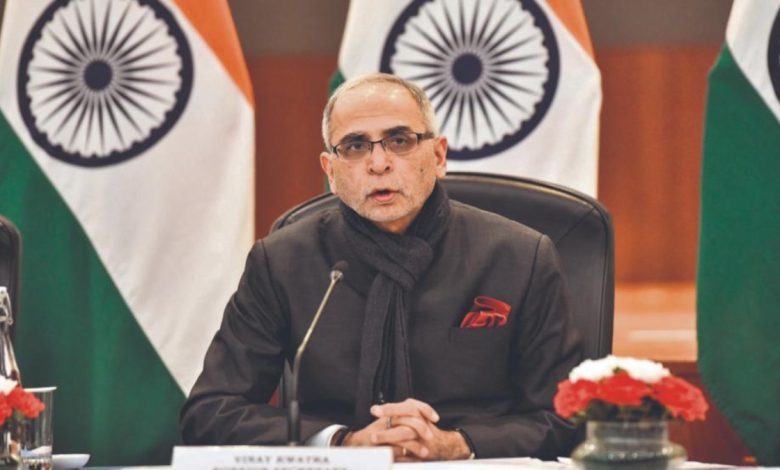
India has strongly protested The New York Times’ use of the term “Pakistani Kashmir” to describe Pakistan-occupied Kashmir (PoK) in a recent headline, calling it “misleading” and reasserting that Jammu and Kashmir and Ladakh remain permanently and inalienably part of India.
New Delhi has repeatedly reinforced this position on PoK, including on international platforms such as the United Nations, insisting the region cannot be separated from India.
The Indian embassy in the US took to X to voice its objection to the headline. “Misleading and incorrect headline by @nytimes. There is no Pakistani Kashmir, only Pakistan-occupied Kashmir.”
Misleading and incorrect headline by @nytimes. There is no Pakistani Kashmir, only Pakistan occupied Kashmir.
The Union Territories of Jammu & Kashmir and Ladakh, have been, are and will always remain an integral and inalienable part of India. Pakistan has illegally occupied…— India in USA (@IndianEmbassyUS) July 29, 2026




“The Union Territories of Jammu & Kashmir and Ladakh have been, are and will always remain an integral and inalienable part of India. Pakistan has illegally occupied parts of these territories and is now using violence against the occupied people,” the embassy said.
What did the NYT report say about PoK?
The American newspaper had used the headline “Clashes Erupt in Pakistani Kashmir as Voting in Local Election Begins” to cover violent unrest that broke out in PoK’s Mirpur on Tuesday morning, after a civil rights group confronted police.
The report, citing a district official, said at least two people had died at the district hospital from gunshot wounds.
The Human Rights Commission of Pakistan, an independent rights organisation, reportedly called for “an immediate end to this cycle of violence” and pressed for an independent investigation into the deaths and injuries.
According to the report, a large crowd of supporters from the civil rights group known as the Joint Awami Action Committee had assembled in Rawalakot, “a town about 20 miles from the heavily militarised de facto border dividing regions of Kashmir claimed by India and Pakistan.”
Also Read:What’s Next On Iran? Three Options Emerge From Trump-Netanyahu Meeting
As the demonstrators tried to march toward the regional capital, Muzaffarabad, clashes broke out with police on the edge of Rawalakot.
‘Part of India illegally occupied by Pakistan’
Speaking on Kargil Vijay Diwas on July 26, defence minister Rajnath Singh criticised Pakistan for institutionalising terrorism as “part of its state policy,” stating there would be no dialogue with Islamabad except on the subject of Pakistan-occupied Kashmir — territory he described as “part of India illegally occupied” by its neighbour.
He also underlined India and its armed forces’ readiness to respond to any provocation from Pakistan “in a manner beyond their imagination.”
India’s consistent position on Kashmir
India has repeatedly affirmed that Jammu and Kashmir has always been, and will remain, an inseparable part of the country.
Earlier this month, India’s permanent representative to the United Nations, Ambassador Parvathaneni Harish, reiterated New Delhi’s position on the region. “For the Union Territory of Jammu and Kashmir, it has always been, is, and will remain an integral and inalienable part of India. This is the constitutional and legal reality that Pakistan deliberately chooses to ignore,” he said.
Harish added that the only outstanding issue concerning Jammu and Kashmir is the “naked aggression and illegal occupation of India’s sovereign territory by Pakistan.”
Earlier in the month, at a foreign policy seminar in Dhaka, Bangladesh, second secretary Puja Jha objected to a map presented at the event that misrepresented Jammu and Kashmir’s status.
Jha, a diplomat with the Indian High Commission in Dhaka, noted that the India map shown during a presentation by Bangladesh’s High Commissioner to India, Ahmed Tariq Karim, depicted Jammu and Kashmir as part of Pakistan.
She interrupted the presentation to flag the error, calling it “factually incorrect.” “The map of India depicted here is incorrect. Jammu and Kashmir is an integral part of India, and I think the map presented here is not correct,” she said.
When Karim explained the map was used only for “representational purposes,” Jha responded, “I understand, sir, but Jammu and Kashmir is an integral part of India, and it is misrepresented here. So I just wanted to point it out.” New Delhi’s position remains unchanged: Jammu and Kashmir was, is, and will always be an integral part of India.