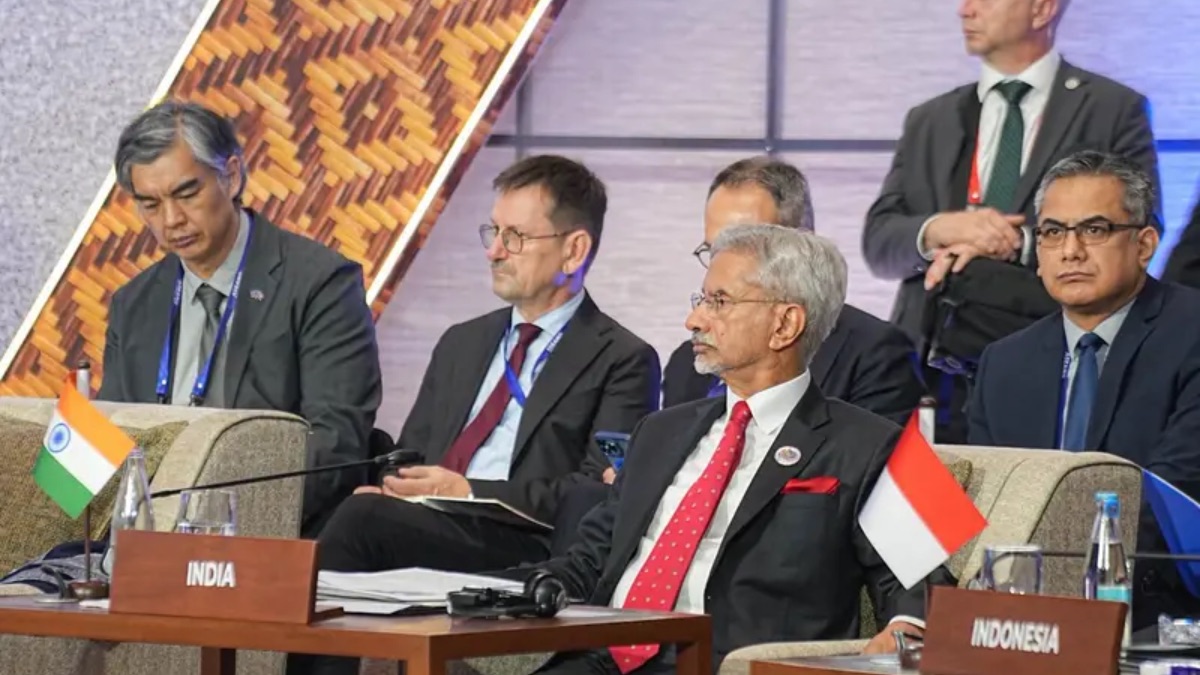
India’s External Affairs Minister S Jaishankar used his address at the 33rd ASEAN Regional Forum (ARF) Ministerial Meeting in Manila on Thursday to deliver a pointed message on terrorism, warning that “acts of terrorism will have consequences” and pushing for a zero-tolerance stance among the gathered foreign ministers. He specifically called for choking off the financial networks that keep terrorism running, while also laying out India’s broader contributions to stability in the Indo-Pacific. Pakistan’s Deputy Prime Minister and Foreign Minister, Senator Mohammad Ishaq Dar, was among those attending this year’s forum.
Jaishankar welcomed the Manila Plan of Action, noting that its five pillars line up closely with India’s own Indo-Pacific approach. He spoke about the value of working together on disaster relief sharing best practices, building common standard operating procedures, and running joint exercises with regional partners.
“India promotes a collaborative approach to disaster relief,” he said, pointing to the Coalition for Disaster Resilient Infrastructure (CDRI), India’s regular deployment of field hospitals, search-and-rescue teams, and relief material as examples. He noted India’s role in post-disaster rehabilitation after cyclones in Sri Lanka, the Philippines, and Jamaica, as well as earthquakes in Myanmar, Venezuela, and Afghanistan.
Also Read: Worry For India: Trump To Levy Upto 200% Tariffs On Generic Medicine
On the security front, Jaishankar pushed for greater focus on maritime domain awareness, citing India’s Information Fusion Centre, the Indo-Pacific Maritime Domain Awareness (IPMDA) initiative, and the deployment of Indian forces stretching from the North Arabian Sea to the Western Pacific all framed as India’s contribution to fighting piracy, trafficking, and narcotics, and keeping trade routes secure.
He also cautioned against efforts to weaken non-proliferation and disarmament norms, called for AI development that stays responsible and human-centric, and urged closer cooperation on tackling cybercrime. Attacks on shipping and civilian infrastructure, he said, are simply “unacceptable,” and safe passage through international waterways has to be protected.
On the South China Sea long a source of regional friction India said it hopes for a Code of Conduct that is substantive, effective, legally binding, and fully compliant with UNCLOS 1982, one that protects the legitimate rights of all who use those waters.
The meeting is taking place against a backdrop of heightened tensions globally, including recent maritime flare-ups in the South China Sea. This year’s ARF, the 33rd edition and hosted by the Philippines, also coincides with the 50th anniversary of the Treaty of Amity and Cooperation in Southeast Asia a moment organizers are using to underline ASEAN’s role as the anchor of the region’s diplomatic architecture.
-
-
-

-