
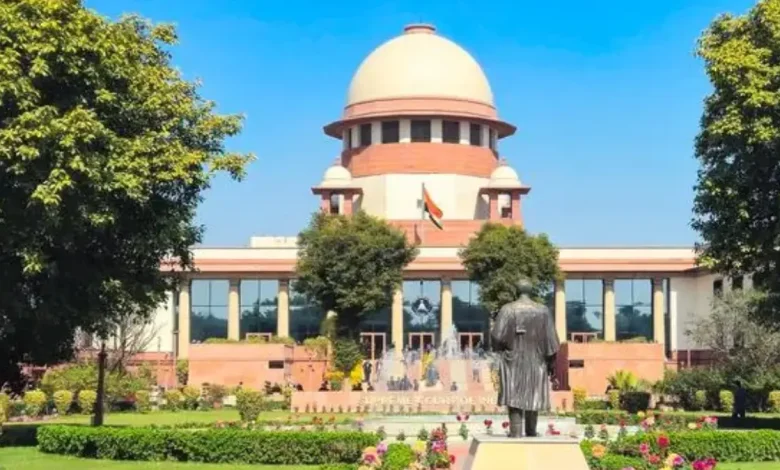
New Delhi: The Supreme Court has quashed criminal proceedings against six people accused of abetting a woman’s suicide after her partner allegedly refused to marry her, ruling that rejection following a consensual relationship does not, by itself, amount to abetment of suicide.
A bench of Justices J.B. Pardiwala and K. Vinod Chandran held that there was no material on record to establish that the accused had instigated the woman to take her own life. The court set aside the proceedings in Sessions Case No. 101 of 2024 and directed that the accused be released if in custody, unless required in another case.
The case originated in Telangana, where the woman had reportedly lived with the first accused, her alleged partner, for around three months. According to the prosecution, the relationship was consensual, and the woman’s siblings alleged that she died by suicide after he declined to marry her.
The complaint also named five others the man’s parents, his sister, a friend and his sister’s prospective groom. The allegations included opposition to the relationship and pressure against the proposed marriage. The case was registered on the basis of a statement given by the deceased woman’s sister.




According to the court’s account, the woman had called her eldest sister before her death and said that her partner had refused to marry her. However, the bench found no evidence establishing that the accused had intended to drive her to suicide or could be attributed knowledge that she would take that step following the refusal.
The judges observed that people react differently to personal setbacks and that a relationship ending in suicide cannot automatically be classified as criminal abetment. Even if the complainant’s allegations were accepted in full, the court said, the material essentially pointed to a refusal to marry followed by the woman’s death.
The bench also questioned the circumstances in which the woman had been taken away from the man’s house, noting that the relationship was consensual and had reportedly been accepted by his family. It further observed that no steps had been taken to avert the threatened suicide after the woman reportedly spoke to her eldest sister about her intention to end her life.
Finding the prosecution unsustainable, the Supreme Court quashed the proceedings against all six accused. It also ordered that their bail bonds stand cancelled if they were already on bail.
The ruling underscores that a tragic outcome following a relationship breakdown is not sufficient, on its own, to establish criminal liability. The circumstances and evidence must support the allegation of abetment.
ALSO READ: Delhi Tightens Security Ahead of CJP Protest Demanding CEC Resignation