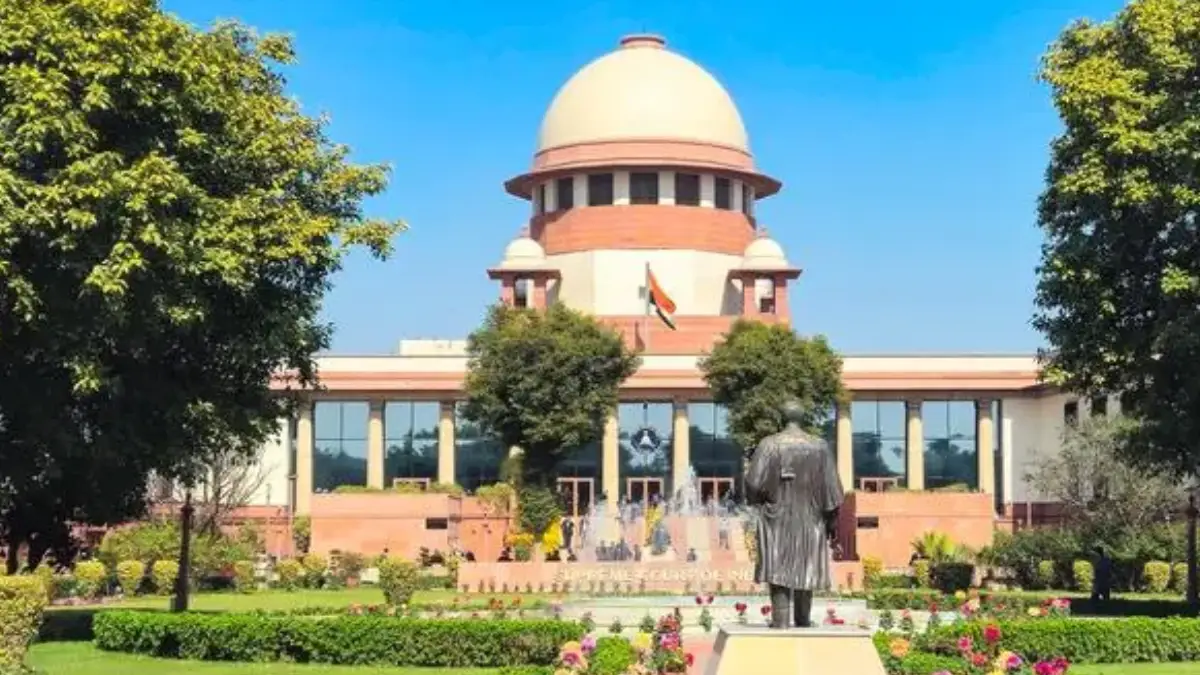
New Delhi: The Supreme Court has given temporary relief to a group of people in Assam who were declared foreigners by Foreigners Tribunals, saying they cannot be deported until their cases are fully heard. The court’s order offer immediate protection to the petitioners while it examines whether the tribunal decisions were legally correct.
A Bench of the apex court issued notices to the Centre, the Assam government and the Election Commission, asking them to respond to the petitions. Until the matter is decided, the court has directed that no coercive action, including deportation, should be taken against the petitioners.
The people who approached the Supreme Court claim they are Indian citizens and say the Foreigners Tribunals wrongly declared them foreigners. According to their petitions, important documents proving their citizenship were either ignored or not properly considered during the hearings. The Supreme Court has not yet ruled on these claims but has decided to protect them from deportation until the case is heard in detail.
The order is significant because citizenship cases in Assam have remained a sensitive issue for years. People declared foreigners by Foreigners Tribunals can face detention and deportation if they fail to get relief from higher courts. By granting interim protection, the Supreme Court has ensured that the petitioners will not face irreversible action before their legal challenge is decided.
The issue of citizenship in Assam has its roots in the Assam Accord of 1985, which fixed March 24, 1971, as the cut-off date for identifying illegal migrants in the state. It later became closely linked to the updating of the National Register of Citizens (NRC), a process aimed at identifying genuine Indian citizens.
Over the years, rights activists and legal experts have raised concerns about how citizenship cases are handled, pointing to difficulties many people face in producing old documents or proving family links. These concerns have been especially strong for poor families, women and people living in rural areas.
The Supreme Court’s latest order does not decide whether the petitioners are Indian citizens. It only ensures that they cannot be deported while their challenge to the tribunal orders is pending. The final outcome of the case is expected to be closely watched, as it could have a bearing on similar citizenship cases in Assam.
ALSO READ: Assam Man Submits 15 Documents, Yet Fails to Prove Indian Citizenship. Here’s Why
-

-

-

-