The Gauhati High Court has upheld a Foreigners Tribunal’s decision declaring an Assam resident a foreigner, despite the man submitting 15 separate documents in an attempt to prove his Indian citizenship. A Division Bench dismissed his writ petition, holding that the evidence he submitted was either legally inadmissible or insufficient to establish citizenship.
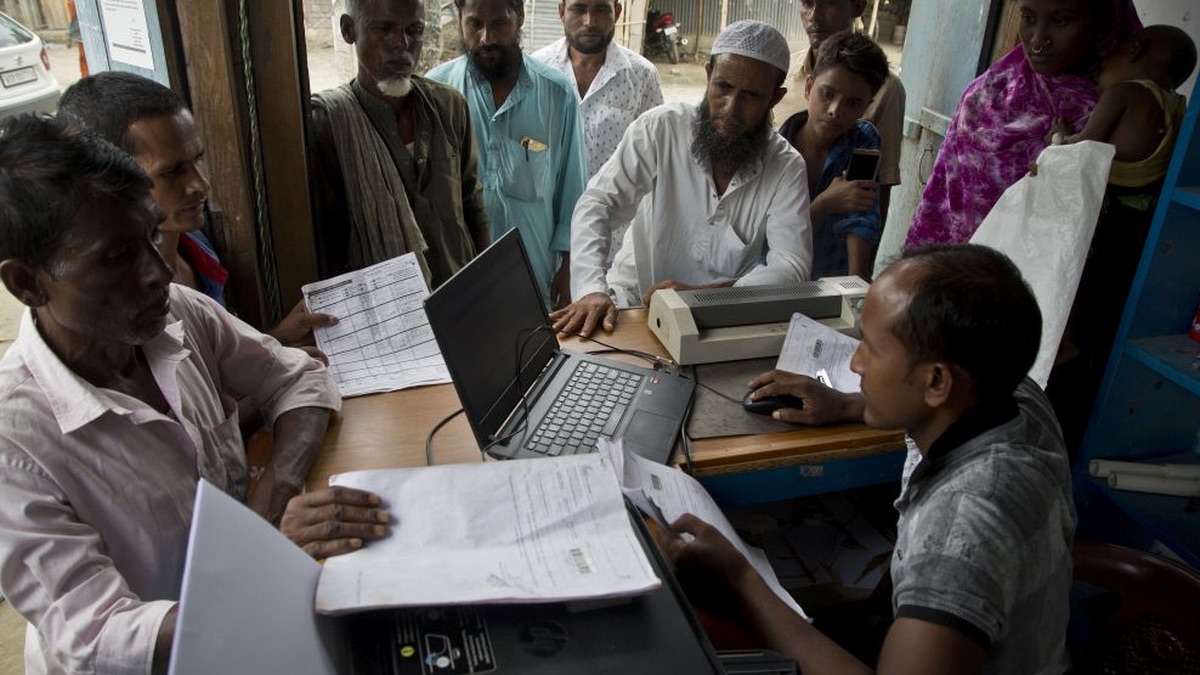
The petitioner, a daily-wage labourer living in rented accommodation near Guwahati, had presented both oral testimony and an extensive paper trail. His documents included copies of the 1951 National Register of Citizens (NRC) listing his father and grandparents, voter lists dating back to 1966, a 1973 land purchase deed, a 2017 school certificate, a PAN card, and an Elector’s Photo Identity Card (EPIC). He also offered his father’s oral testimony to establish lineage.
A Division Bench comprising Justices Kalyan Rai Surana and Shamima Jahan ruled that none of the documents successfully linked the petitioner to his claimed ancestry, holding that he had failed to discharge his burden under Section 9 of the Foreigners Act, 1946, to prove he is not a foreigner but an Indian citizen.
What the tribunal rejected — and why
The most consequential rejection concerned the 1951 NRC records. Assam compiled its first National Register of Citizens after the 1951 Census; when the register was updated in 2019, applicants had to establish links to that 1951 data or provide pre-1971 legacy documents to prove citizenship. The court held that the petitioner’s NRC copies were computer-generated extracts — bearing Image IDs and a “Generated by DLDD Version 6.0” notation, referring to the Digitised Legacy Data Development system used in the NRC process — and that without a certificate under Section 65B of the Evidence Act, 1872, such records carry no evidentiary value. The court also cited Section 15 of the Census Act, 1948, which bars Census records from being used as proof of domicile.
Four other documents were similarly discarded. The 2017 school certificate was rejected because the petitioner did not produce the headmaster who issued it, nor the school’s admission register. The 1973 land deed was rejected for lacking a clear lineage link — the court noted no explanation was given for why the land hadn’t devolved to the grandfather’s legal heirs, and no land revenue records were produced to clarify the chain of ownership. The PAN card and EPIC were rejected outright, with the court holding it is “well settled” that neither serves as proof of citizenship.
Discrepancies in the voter lists
The court also flagged significant inconsistencies across the submitted voter lists. One family member was listed as 25 years old on the 1979 roll and 29 on the 1989 roll. Some names appeared on the lists without any pleading or evidence connecting them to the family. Most significantly, the family’s name appeared across three different villages — Dhobakura, Ghugudoba, and Hashdoba — with the court finding the entries in each location appeared to belong to entirely different families, making it impossible to establish continuous lineage from before 1966.
The father’s oral testimony was ruled insufficient on its own, with the court noting that citizenship claims cannot rest on oral statements alone and require documentary corroboration. The court further noted that the petitioner’s father, on cross-examination, was found to be a different person from the individual listed under his name on the 2015 voter roll, despite that name appearing on the 1970 list as well.
Finding no legal infirmity in the Tribunal’s reasoning and no evidence that its opinion was perverse, the High Court dismissed the writ petition, upholding the finding that the petitioner is not an Indian citizen.
-

-
-

-