
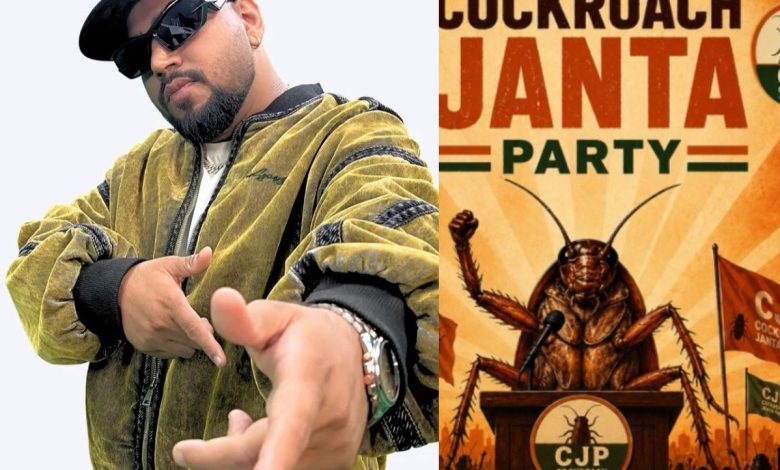
Independent rapper Santy Sharma has found himself at the center of online discussions after sharing his views on the viral “Cockroach Janta Party” (CJP) trend. According to Firstpost, Sharma described the movement as something that appears more like “internet drama” than an organised public movement, leading to sharp reactions across social media platforms.
Who is Santy Sharma?
Santy Sharma is known as an Indian independent rapper and digital content creator who has built a strong online following through his outspoken commentary and music. Over the years, he has built a notable presence online via music, public statements, and participation in discussions surrounding influencer culture , internet controversies , and youth-foucsed topics. Earlier, he also gained attention for supporting rapper Badshah when “Tateeree” song controversy popped up.
His recent remarks about the rapidly growing CJP trend attracted attention on platforms such as Instagram, X, and YouTube, where users debated his opinions extensively.



As reported by The Economic Times, Sharma questioned the motivations behind online political trends and advised young audiences not to blindly follow viral narratives without understanding the facts behind them. He argued that criticism of governments is part of a democratic society, but emotionally driven internet campaigns and outrage culture can sometimes distract from meaningful public discourse.
The “Cockroach Janta Party” has recently become one of India’s most talked-about online movements. Reuters reported that the satirical digital campaign gained massive traction among Gen Z users by highlighting issues such as unemployment, inflation, and frustration with traditional politics. The movement reportedly emerged after comments linked to Chief Justice Surya Kant comparing unemployed youth to “cockroaches,” a remark that later sparked controversy online.
Several international and Indian media outlets, including Reuters, Associated Press, The Guardian, and The Indian Express, noted that the movement quickly evolved into a wider conversation about youth dissatisfaction, political messaging, and online activism in India.
Santy Sharma’s comments further intensified the debate, with supporters defending his right to express his views while critics accused him of dismissing genuine public concerns. His statement also reopened conversations around the influence of digital activism and the role social media plays in shaping political narratives among younger audiences.
Also Read: Raghav Chadha Appointed Rajya Sabha Committee Chairman After Joining BJP