
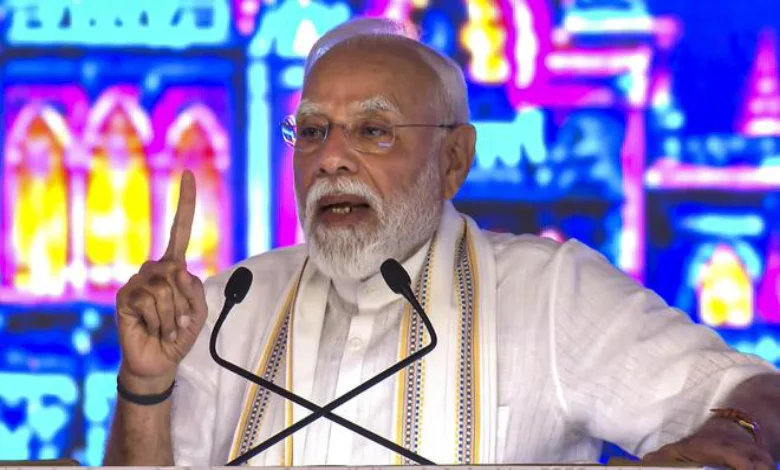
About 150 kilometers of the 379-kilometer Vadodara-Mumbai Expressway are now operational after Prime Minister Narendra Modi opened two sections of the route on Tuesday.
The two portions that were opened today are from Surat to Navsari and from Vadodara to Bharuch and Ankleshwar. The entire expressway is anticipated to be finished by 2027–2028, with work already underway on the Palghar, Virar, and JNPT (Navi Mumbai) parts in Maharashtra and the Valsad-Vapi stretch in South Gujarat.
The 36-kilometer Kim-Ena portion of the Delhi-Mumbai Expressway, which is now in use, connects the Kim Interchange to the Ena Interchange close to Surat. From the Ena Interchange to the Gandeva-Kharel Interchange close to Navsari, the Gandeva-Ena segment stretches 27.5 km.
These segments together make up about 63.5 km of the eight-lane, access-controlled greenfield expressway. These two sections were built in Gujarat at a cost of Rs 7,689 crore. The Delhi-Mumbai Expressway includes the Vadodara-Mumbai Expressway.



The former Mumbai-Ahmedabad National Highway (NH-48) would have much less traffic and heavy vehicles thanks to the expressway. For freight transportation to and from the marketplaces and port-based industrial hubs (Surat, Dahej, Ankleshwar, Hazira) of South Gujarat’s textile, diamond, and chemical industries, it will lead to significant time and fuel savings.
The Delhi-Mumbai Expressway (NE-4), which is 1,350 km long, includes the Vadodara-Mumbai Expressway. It has connections to Vadodara, Sohna, the Kundli-Manesar-Palwal (KMP) expressway, and the DND. Before arriving in Dahod, Godhra, and Vadodara in Gujarat, the route travels through Madhya Pradesh’s Ratlam and Mandsaur and Rajasthan’s Haryana, Dausa, and Kota.
The Vadodara-Virar-JNPT segment will start in Vadodara and travel straight through Surat, Navsari, and Vapi-Virar to Mumbai (JNPT, Navi Mumbai).