
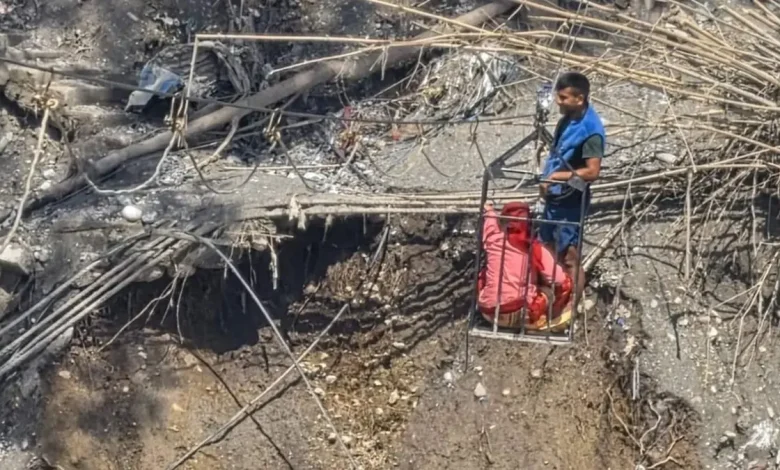
Devighat: For people living in Devighat, crossing the Trishuli River is no longer a routine part of the day. The bridges that once connected the community are gone, swept away by the raging river. Now, a roughly 250 metre zipline is helping residents cross the divide and get essential supplies to the other side.
The scene in Devighat is a reminder of just how suddenly the floods changed lives. Roads have disappeared, homes have been damaged and familiar routes have been replaced by mud, rocks and debris.
Where a bridge once stood, there are now only remnants. The river continues to flow below, separating families and communities that were connected just days earlier.
The temporary zipline has emerged as an unlikely solution. It is being used to move people and supplies across the river while residents wait for safer and more permanent access to be restored.



But for those living through the aftermath, the destruction is about more than broken bridges.
Personal belongings can be seen scattered across the wreckage a suitcase, slippers and even a guitar among the mud and debris. They are small objects, but they tell the story of homes and ordinary lives suddenly torn apart.
Devighat is among the areas hit by the devastating floods that struck parts of Nepal on August 26. The disaster caused widespread destruction along the Trishuli and other river systems, washing away infrastructure and leaving communities isolated.
The wider disaster has also triggered a major search and rescue operation. By September 5, more than 1,300 people had reportedly died and nearly 4,900 were still missing, according to Reuters. Rescue teams continued searching damaged areas, including hydropower projects where workers were feared trapped.
There have also been moments of hope. On September 5, rescuers pulled a Chinese worker alive from a 225 metre tunnel at the Upper Trishuli-1 hydropower project. Another woman was rescued from a damaged house in Nuwakot, while two Nepali workers had been pulled alive from a different hydropower tunnel a day earlier.
In Devighat, the immediate concern remains much simpler getting people from one side of the river to the other. Until bridges and roads return, a thin line stretched across the Trishuli is doing the job that concrete and steel once did. For now, that zipline is more than a temporary crossing. For a community cut in two by the floods, it is a lifeline.
ALSO READ: Engineer’s Miraculous Survival After 10 Days Trapped In Nepal Tunnel