
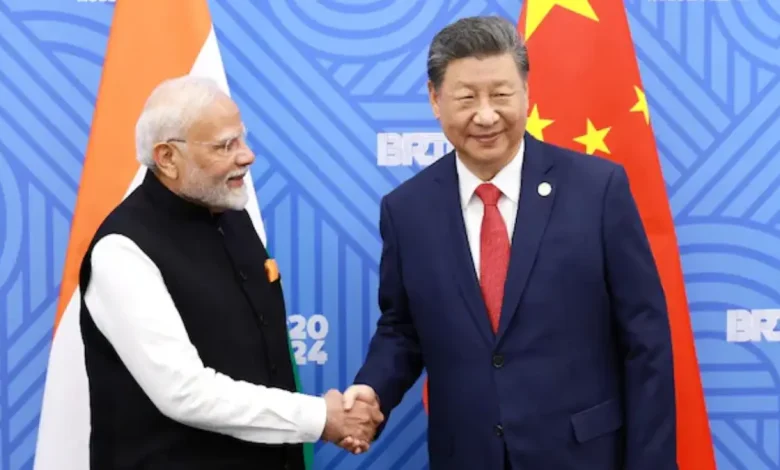
New Delhi : Prime Minister Narendra Modi is likely to hold a bilateral meeting with Chinese President Xi Jinping on the sidelines of the BRICS Summit in New Delhi on September 12. The proposed meeting is expected to be closely watched as India and China seek to consolidate a cautious thaw in ties following years of military tensions, diplomatic estrangement and strained economic engagement.
His visit will mark his first trip to India in seven years and his first since the 2020 border crisis. New Delhi and Beijing, however, are yet to issue a formal statement confirming the proposed bilateral. The two leaders recently shared the stage at the Shanghai Cooperation Organisation (SCO) Summit in Kyrgyzstan’s Bishkek, where they shook hands but did not hold a formal bilateral meeting.
The Working Mechanism for Consultation and Coordination (WMCC) on India-China border affairs has also met, followed by talks between the two countries’ Special Representatives on the boundary question. The renewed diplomatic engagement comes amid a gradual stabilisation of ties following the disengagement of troops from several friction points along the Line of Actual Control (LAC).
Twenty Indian soldiers were killed in the clash, while China later acknowledged the deaths of four of its soldiers. The confrontation triggered a prolonged military stand-off along the LAC and resulted in a sharp deterioration in political, economic and diplomatic relations. Since then, the two sides have held multiple rounds of military and diplomatic negotiations aimed at disengaging troops and easing tensions at friction points along the border.



The two sides have increasingly relied on military and diplomatic channels to manage differences, prevent further escalation and create conditions for a gradual stabilisation of ties. The proposed summit-level engagement could provide an opportunity to build on that process. Despite the easing of tensions in eastern Ladakh, the wider boundary dispute continues to pose a major challenge to India-China relations, with Arunachal Pradesh remaining one of the most sensitive areas.
Read Also : Eknath Shinde Receives Commonwealth Public Leadership Award at British Parliament