
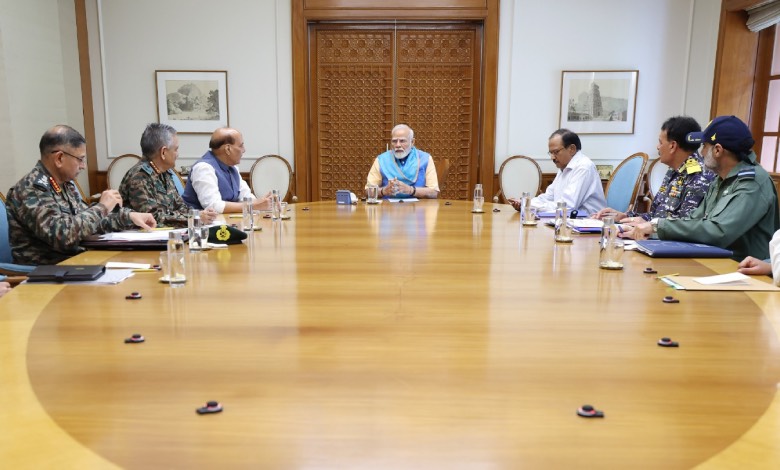
Prime Minister Narendra Modi on Saturday chaired a high-level ministerial meeting to assess India’s petroleum, crude oil, gas, power, and fertiliser supply chains as the West Asia conflict drags on with no ceasefire in sight.
The meeting, held on March 22, brought together Union Defence Minister Rajnath Singh, Petroleum and Natural Gas Minister Hardeep Singh Puri, and other senior ministers. The stated aim was to secure uninterrupted supply, stable logistics, and efficient distribution of essential resources across the country.
The government has been watching both the conflict and the Strait of Hormuz the maritime chokepoint through which a significant share of India’s energy imports pass to protect consumer and industry interests. The Strait remains closed. The war is now in its 23rd day, casualty figures remain disputed between the parties involved, and a resolution looks unlikely in the near term.
Modi had previously described the situation on March 12 as a “critical test of national character,” framing it as a test of the government’s ability to manage supply chain disruptions.



Also Read:Narendra Modi Becomes India’s Longest-Serving Elected Leader, Marks Historic Milestone
A day before the ministerial review, on March 21, Modi spoke with Iranian President Masoud Pezeshkian on the occasion of Nowruz and Eid al-Fitr. During the call, he urged “freedom of navigation” in the Strait of Hormuz. Pezeshkian, in turn, asked India currently holding the BRICS presidency to play an “independent” role in pushing for an end to US and Israeli military operations against Iran. The US and Israel have engaged in military action against Iran without a unified stated objective.
External Affairs Minister S. Jaishankar also held a separate conversation with his Iranian counterpart Abbas Araghchi on the conflict and its “implications for the larger region.” Iran has gone beyond calling for a ceasefire — it has demanded guarantees against future acts of aggression.