

New Delhi: In a fresh strain on bilateral ties, Nepal’s new government has formally protested India’s plan to resume the Kailash Mansarovar Yatra through the Lipulekh Pass in Uttarakhand, a route long used by Indian pilgrims but claimed by Kathmandu. India has dismissed the objection, reiterating that Nepal’s territorial assertions lack historical basis and are not tenable.
The Indian government responded swiftly to a statement issued by Nepal’s foreign ministry, which expressed concerns over the pilgrimage route and claimed Lipulekh as Nepali territory. According to the external affairs ministry, India’s position remains consistent and unambiguous: Lipulekh Pass has served as a traditional route for the Kailash Mansarovar Yatra since 1954, with the pilgrimage operating through this corridor for decades. Officials described the resumption as nothing new, underscoring that Nepal’s claims represent an “unilateral artificial enlargement” of territory that India does not accept.
Nepal’s statement asserted that, under the Sugauli Treaty of 1816, areas including Limpiyadhura, Lipulekh, and Kalapani — east of the Mahakali River — form an integral part of its territory. It added that Kathmandu has diplomatically conveyed its “clear stance and concern” to both India and China, emphasizing that any activities in the region, such as road construction, border trade, or pilgrimage tourism, should be avoided. Nepal also noted that it has officially informed China of its position on the Lipulekh region.
ALSO READ : Elections Result : Counting of Votes Began in Bengal, Tamil Nadu, Kerala
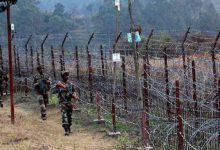


India has previously urged Nepal to refrain from unjustified cartographic assertions and to respect its sovereignty and territorial integrity. For New Delhi, the Kalapani area, encompassing Lipulekh and Limpiyadhura, remains part of Uttarakhand state. The Lipulekh Pass constitutes one of the tri-junction points shared by Nepal, India, and China.
This border-related matter is expected to test relations under Nepal’s new leadership led by Balendra Shah as it formulates its foreign policy priorities. Meanwhile, both countries are preparing for a visit by India’s foreign secretary Vikram Misri to Kathmandu next week to advance bilateral cooperation.
In its response, India expressed openness to constructive dialogue with Nepal on all bilateral issues, including the resolution of agreed boundary matters through diplomatic channels based on historical evidence and mutual understanding. Nepal, for its part, affirmed its commitment to resolving disputes peacefully via treaties, maps, and established facts.
The development comes against the backdrop of earlier Nepali objections to India-China initiatives for expanding trade through the strategic Lipulekh Pass.