
Jaishankar Defends Docking Of Iranian Warship In Kochi, Calls It ‘The Right Thing’ Under International Law
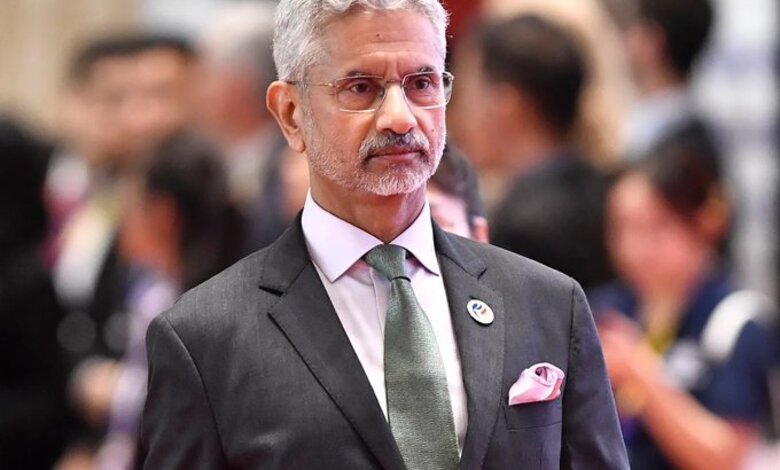
New Delhi: External Affairs Minister S Jaishankar on Thursday defended India’s decision to allow an Iranian naval vessel to dock at Kochi Port, calling it both a humane and legally sound move in line with international law.
Speaking at the Raisina Dialogue, Jaishankar explained that India received a distress message from the Iranian side requesting port access for IRIS Lavana, one of two Iranian frigates that had participated in MILAN 2026 a multilateral naval exercise hosted by India.
“Here’s the situation. We got a message from the Iranian side that one of the ships, which presumably was closest to our borders at that point in time, wanted to come into our port. They were reporting that they were having problems. On the 1st March, we said you can come in, and it took them a few days to sail in, and then they docked in Kochi,” Jaishankar said.
He noted that by the time IRIS Lavana arrived at port, circumstances had changed dramatically. The second Iranian frigate, IRIS Dena, was torpedoed and sunk by the USS Charlotte on March 4 approximately 40 nautical miles off the coast of Sri Lanka marking the first time a US submarine has sunk an enemy vessel since World War II. Jaishankar said the crew of IRIS Lavana had “got caught on the wrong side” of a rapidly escalating situation.



The legal dimensions of the episode remain contested. Under the Law of Armed Conflict (LOAC) and the law of naval warfare, targeting a vessel in international waters by a belligerent party can be considered lawful. However, the UN Charter prohibits such acts of aggression and since IRIS Dena was returning from a peaceful multilateral exercise, critics argue the broader US military campaign against Iran itself violates the UN Charter.
Also Read: Over 52,000 People Flown From Gulf To India Till Friday : DGCA
India’s response to the sinking drew sharp criticism domestically. The absence of any official condemnation from New Delhi over the destruction of IRIS Dena triggered a wave of backlash on social media, with the hashtag #Modisilence trending widely. The opposition questioned India’s “strategic autonomy,” pointing out that Prime Minister Narendra Modi had visited Israel just two days before the US-Israeli military offensive against Iran commenced on February 28.
Jaishankar, however, framed India’s quiet approval of the Iranian vessel’s docking as evidence of principled neutrality and its role as a net security provider in the Indian Ocean region. He also addressed the broader security landscape in West Asia and the Indian Ocean, pushing back against critics by urging them to accept the geopolitical realities of the region.
VIDEO | On US attacking Iranian warship, External Affairs Minister Dr S Jaishankar (@DrSJaishankar) says, "Iranians ships were on fleet review but got on wrong side of events; we allowed Iran ship to enter due to humanitarian concern, we did the right thing."
— Press Trust of India (@PTI_News) March 7, 2026
(Full video… pic.twitter.com/ZRpUHLVQPv
“There are a lot of social media debates going on over this. Please understand the reality of the Indian Ocean. Diego Garcia has been in the Indian Ocean for the last five decades. The fact that there are foreign forces based in Djibouti happened in the early first decade of this century. Hambantota came up during this period,” he said.
VIDEO | In an interactive session at the Raisina Dialogue, External Affairs Minister Dr S Jaishankar (@DrSJaishankar) says, "Indian Ocean Region is an ecosystem under process of recovery and rebuilding for restoring connectivity in Southeast Asia, West Asia."
— Press Trust of India (@PTI_News) March 7, 2026
(Full video… pic.twitter.com/YWWQ7UprXN
Jaishankar also remarked that the Indian Ocean is presently undergoing “redevelopment and restoring connectivity,” and described the presence of foreign military bases in the region as an existing “reality” that must be acknowledged rather than debated in abstraction.