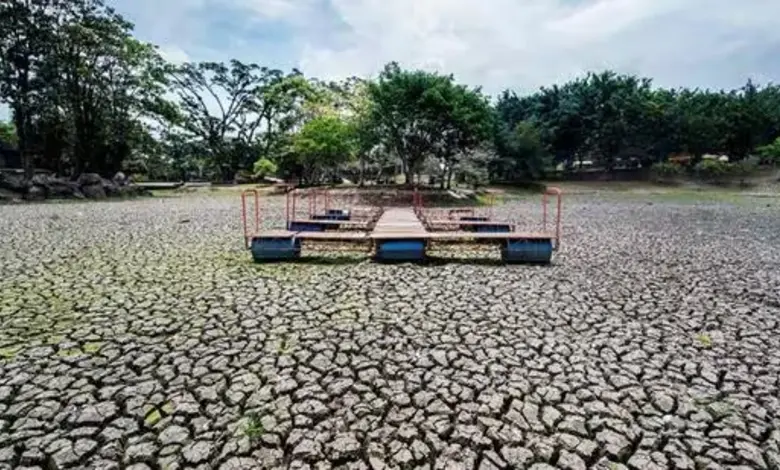
India is preparing for more intense summer conditions and a potentially subdued monsoon season as El Niño patterns strengthen across the equatorial Pacific, raising prospects for elevated temperatures and reduced rainfall over significant areas of Asia.
Meteorological authorities indicate that oceanic and atmospheric signals consistent with El Niño have now appeared in the region, pointing to the development of this climate phenomenon. In the Indian context, such events typically correlate with below-average monsoon precipitation and higher-than-normal summer temperatures.
Earlier assessments had projected monsoon rainfall close to normal levels, but a recent update revised this to approximately 90 percent of the long-term average, with a margin of error of plus or minus 4 percent. This seasonal rainfall is vital for the country’s agriculture, as nearly half of the cultivated land depends on it without reliable irrigation. It also helps replenish major reservoirs essential for drinking water, industrial needs, and electricity production.
The current year’s monsoon holds particular significance given ongoing global supply challenges for farmers and the added risk of suppressed rainfall from these climate conditions.
Global climate monitoring services report that the just-concluded month ranked as the second warmest May on record worldwide for combined land and ocean surfaces. Average global surface air temperatures reached 15.81 degrees Celsius, exceeding the 1991-2020 baseline by 0.55 degrees Celsius and standing 1.42 degrees Celsius above pre-industrial levels from 1850-1900. Sea surface temperatures in May averaged 20.90 degrees Celsius, the second highest for the month in available records.
Exceptionally warm waters persisted across large parts of the tropical Pacific, consistent with the ongoing shift toward El Niño, which forecasters expect to strengthen in the coming months. In Europe, the period featured an abrupt shift to one of the earliest and most severe heatwaves in western parts of the continent, setting new May temperature benchmarks in several countries and underscoring broader patterns of increasing extreme heat.
Precipitation patterns varied regionally: wetter conditions affected parts of North America, areas north of the Indian subcontinent, western China, sections of Brazil, southern Africa, and much of Australia. Drier anomalies appeared in the central United States, Central Asia, Madagascar, southwestern Australia, and extensive areas of South America. Arctic sea ice extent was notably below average, while Antarctic coverage also remained lower than typical.
Experts emphasize the need for heightened awareness and preparedness as these developments unfold, highlighting the interconnected nature of global climate systems and their potential impacts on weather-dependent sectors.
-

-

-

-